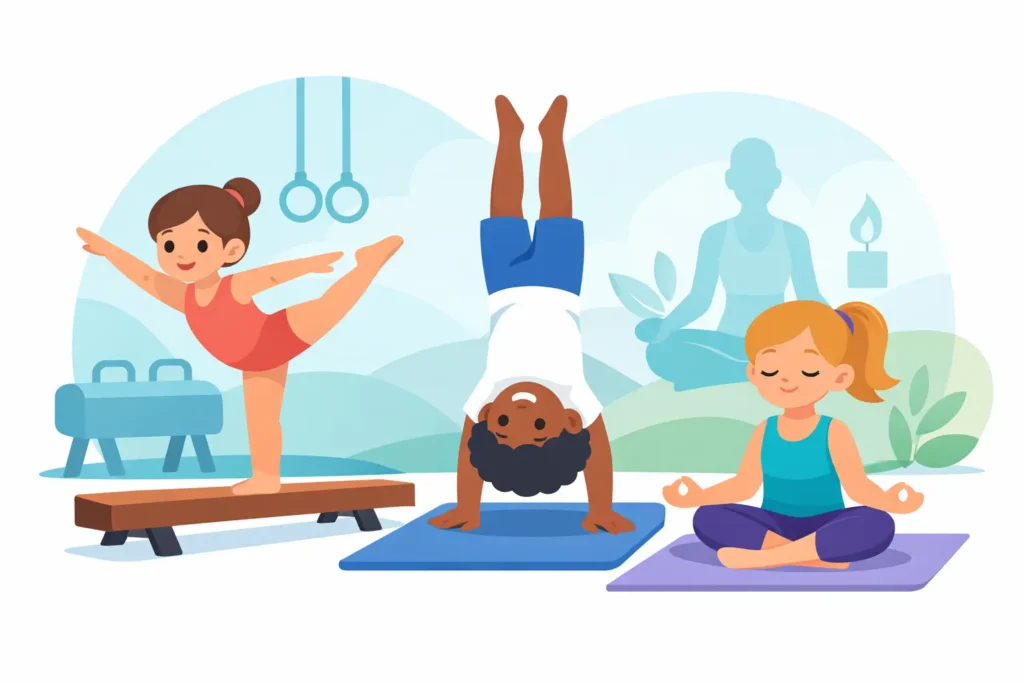
If your child has plenty of energy but loses interest quickly, the right movement activity can make a big difference. Fitness Activities For Kids like gymnastics, swimming, yoga can do more than help children burn energy – they also build coordination, confidence, focus, and healthy routines that support learning at home and in the classroom.
For preschoolers and early elementary kids, movement is not separate from development. It is part of how they learn. A child balancing on one foot is practicing body awareness. A child following a yoga pose is building listening skills. A child learning to float in the pool is growing in confidence, patience, and trust.
That is why active play matters so much in the early years.
This guide is for parents, homeschool families, and educators who want simple ways to choose age-appropriate fitness activities that feel fun, structured, and realistic.
Why fitness activities matter in early childhood
Young children learn with their whole bodies. Before they can sit still for longer lessons, they often need to move, climb, stretch, jump, and practice controlling their bodies in space. Physical activity supports large motor development, but it also helps with attention, self-regulation, and persistence.
That matters for school readiness. Children who develop balance, coordination, and body control often have an easier time with everyday classroom tasks such as sitting upright, transitioning between activities, and participating in group games. Regular movement can also help reduce stress and improve sleep, which parents know affects everything else.
The best fitness activities are not always the most competitive or expensive ones. For many young children, the strongest fit is an activity that offers repetition, encouragement, and room to grow at their own pace.
Choosing fitness activities for kids like gymnastics, swimming, yoga
When adults choose activities for children, it is easy to focus on what sounds impressive or what other families are doing. A better approach is to think about your child’s temperament, sensory preferences, and developmental stage.
Some children love fast movement and group energy. They may do well in beginner gymnastics or a movement class with climbing, rolling, and jumping. Other children feel overwhelmed in noisy spaces and may respond better to yoga, dance-based stretching, or a calm swim lesson with a predictable routine.
Safety and readiness matter too. A four-year-old may enjoy the basics of gymnastics, but that does not mean they are ready for intense skill training. A child may love water but still need slow, patient exposure before joining a full swim class. The goal in the early years is not performance. It is building positive associations with movement.
A simple question can help: Does this activity make my child feel capable, engaged, and excited to try again? That is often a better sign than whether they are advancing quickly.
Gymnastics for strength, balance, and body control
Gymnastics is often a great fit for young children because it naturally develops core strength, coordination, flexibility, and spatial awareness. Even beginner classes introduce valuable movement patterns such as balancing, landing safely, rolling, and supporting body weight through the arms.
These skills carry into everyday life. Children who practice gymnastics often become more confident on playgrounds, more aware of their bodies, and more comfortable trying new physical challenges. There is also a strong listening component. Following directions during stations or simple sequences helps children practice focus and turn-taking.
Still, gymnastics is not one-size-fits-all. Some children thrive in the structured challenge, while others may feel frustrated if the pace moves too quickly. For beginners, look for programs that emphasize fun, safety, and fundamentals rather than performance. At home, you can support similar skills with cushions for balance walking, animal walks, safe tumbling on mats, and simple stretching games.
Swimming for coordination, confidence, and safety
Swimming offers both fitness benefits and a life skill. For many families, that combination makes it especially valuable. In the early years, swim lessons help children become more comfortable in water, improve breath control, and build strength without the impact of land-based sports.
Swimming is also useful for children who do not enjoy high-contact or high-noise activities. The water can provide calming sensory input, and many kids enjoy the feeling of moving in a different way than they do on the ground. Over time, swim practice supports endurance, coordination, and confidence.
There are trade-offs to keep in mind. Some children need longer to warm up to water, especially if they dislike splashing in the face or changing environments. Progress can feel slower than in a land activity because water safety skills require patience and repetition. That is completely normal.
If formal swim lessons are not possible right now, smaller steps still help. Water play with cups and toys, blowing bubbles in the bath, and practicing comfort with getting the face wet can build readiness before lessons begin.
Yoga for focus, flexibility, and calm mind
Yoga is one of the most useful movement activities for children who need help slowing down, handling big feelings, or resetting after busy parts of the day. It strengthens the body, but it also teaches breathing, body awareness, and self-control in a way that feels gentle and manageable.
For young children, yoga works best when it is playful. Animal poses, simple balance poses, and short breathing games keep it engaging. A child pretending to be a cat, tree, or butterfly is still practicing flexibility, coordination, and focus. Just as important, they are learning how to notice their body and calm themselves.
Yoga can be especially helpful during transitions. A few minutes in the morning, after school, or before bedtime can create a predictable routine that supports emotional regulation. In homeschool or classroom settings, short yoga breaks can also improve attention before seated work.
Not every child will enjoy stillness right away. Some will prefer movement-heavy activities first. That is okay. Yoga does not need to be long or quiet to be effective. Even five minutes of guided stretching and breathing can be valuable.
Other great fitness options for young kids
While gymnastics, swimming, and yoga are strong choices, they are not the only ones worth considering. Dance builds rhythm, coordination, and memory. Soccer can improve endurance and teamwork, though some young children find team sports harder if they are still learning how to follow group rules. Martial arts can support discipline, balance, and confidence, especially for children who benefit from routine and clear expectations.
Simple outdoor play counts too. Obstacle courses, scavenger hunts, hopping games, scooter rides, and playground climbing all build fitness. For many families, these everyday options are the most sustainable because they are free, flexible, and easy to repeat.
The best plan is often a mix of structured and unstructured movement. A weekly class can teach skills and consistency, while free play gives children room to explore, create, and enjoy being active without pressure.
How to make movement part of your weekly routine
Children benefit most from fitness when it becomes part of regular life instead of an occasional event. That does not mean creating an exhausting schedule. In fact, too many activities can backfire, especially for young children who still need downtime and open-ended play.
Start small. One organized activity plus daily active play is enough for many preschool and early elementary children. A realistic rhythm might include a swim lesson once a week, ten minutes of yoga on two mornings, and outdoor movement most afternoons. Consistency matters more than intensity.
It also helps to connect movement to your child’s interests. If they love animals, use animal walks and themed yoga poses. If they enjoy pretend play, turn exercise into a story. If they are working on counting or early literacy, blend learning with movement by counting jumps, tracing letters in the air, or doing a scavenger hunt based on sounds or colors. This is where brands like Kids Learning Journey naturally support families – children often learn best when movement and skill building work together.
What parents and educators should know?
A good activity should challenge a child without overwhelming them. Some frustration is normal when learning new skills, but repeated distress, shutdowns, or fear may be a sign that the activity is not the right fit yet. That does not mean the child is not athletic. It may simply mean they need a different pace, teacher, or environment.
Look for signs of healthy engagement. Is your child proud after participating? Are they gradually becoming more coordinated or willing to try? Do they talk positively about the activity later? These small clues often matter more than technical progress.
Above all, keep the focus on growth and enjoyment. Early childhood fitness should help children feel strong, capable, and comfortable in their bodies. When movement feels positive, kids are much more likely to carry those habits forward.
The right activity does not have to be perfect. It just has to give your child a safe, encouraging place to move, learn, and come back ready for more.