
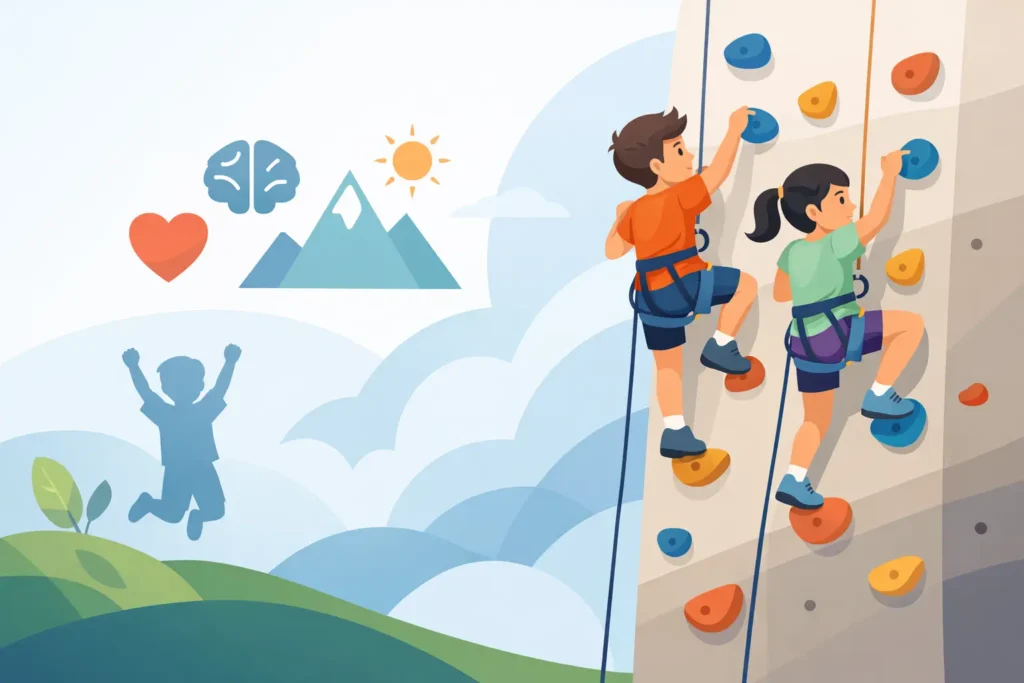
If your child is always climbing the couch, scrambling up playground equipment, or turning backyard play into an obstacle course, that instinct is not just high energy. The Benefits Of Climbing For Kids are closely tied to healthy physical, cognitive, and emotional development, especially in the preschool and early elementary years.
For many parents and teachers, climbing can look like an activity difficult to manage. But when it happens in the right environment, climbing gives children a powerful kind of learning through movement. It builds strength, body awareness, confidence, and even early problem-solving skills. In other words, it is more than play. It is purposeful practice for growing minds and bodies.
Why climbing matters in early childhood?
Young children learn best when they can move, explore, test ideas, and respond to what their bodies feel. Climbing naturally supports all of that. A child has to decide where to place a foot, how tightly to grip, whether they can reach the next step, and what to do if they feel unsteady. Those are big developmental tasks packed into one simple activity.
This is one reason climbing stands out from more passive forms of entertainment. It asks children to be alert, active, and fully engaged. For families trying to reduce screen time and encourage more meaningful play, climbing offers a healthy outlet that feels exciting instead of forced.
1. Physical benefits of climbing for kids
One of the clearest benefits of climbing is whole-body development. Climbing uses the arms, legs, core, hands, and feet all at once. That makes it different from activities that isolate only one or two muscle groups.
As children climb, they build strength in their shoulders, arms, and trunk. Core strength matters more than many people realize. It helps children sit upright, stabilize their bodies, and support later skills like handwriting, cutting, and classroom endurance. A child with better core control often has an easier time with everyday learning tasks.
Climbing also improves balance and coordination. Children are constantly shifting weight, adjusting their posture, and figuring out how to move one body part without losing control of the others. This kind of movement supports gross motor development, which is a key foundation for active play, sports, and general physical confidence.
Grip strength gets a boost too. Holding onto bars, ropes, ladders, or climbing walls helps strengthen the small muscles in the hands and wrists. That may not seem connected to academics at first, but hand strength supports fine motor tasks such as drawing, writing, and manipulating classroom tools.
Endurance is another advantage. Even short climbing sessions challenge the body in a healthy way. Over time, children can build stamina and become more comfortable with physical effort.
2. Climbing supports brain development
Parents often think of climbing as a physical skill first, but it also supports learning in important ways. When children climb, they are making decisions in real time. They judge distances, notice patterns, remember routes, and plan their next move.
That process strengthens spatial awareness. A child learns where their body is in relation to the environment and how much room they need to move safely. Spatial awareness is helpful far beyond the playground. It plays a role in early math understanding, puzzle work, and even organizing materials on a page.
Climbing also encourages problem-solving. Children quickly discover that not every route works. Sometimes a step is too high, a grip is too weak, or a plan has to change halfway through. That trial-and-error experience teaches flexible thinking. Instead of being told the answer, children get to test, adjust, and try again.
There is also a focus and attention piece. Climbing requires concentration. When children are engaged in a physical challenge that feels just hard enough, they often stay with it longer than adults expect. This kind of sustained attention can be especially valuable for young children who need more active ways to practice self-control and persistence.
3. Emotional and social benefits
Climbing can be a major confidence builder. Each time a child reaches a platform, crosses a ladder, or makes it to the top of a small structure, they get clear evidence that effort leads to success. That feeling matters.
For children who are sometimes hesitant, climbing offers manageable risk. They can test limits in a controlled setting and learn that feeling unsure does not mean they have to give up. With support, many children become braver over time, not because they were pushed, but because they practiced.
This kind of success helps build resilience. A child may slip, need to climb down, or decide they are not ready for a taller structure yet. Those moments are valuable too. They teach self-awareness, patience, and the idea that growth happens in steps.
In group settings, climbing often supports social development as well. Children learn to wait for turns, give one another space, and sometimes encourage peers. On playgrounds and climbing structures, they practice reading social cues and following safety expectations. Those are meaningful skills for both classrooms and everyday life.
4. Sensory benefits that many adults overlook
Some children seek movement constantly. Others seem cautious and need extra time to feel comfortable in active environments. Climbing can help both kinds of children because it provides rich sensory input.
It gives the body proprioceptive input, which is the feedback muscles and joints send to the brain about movement and position. That information helps children understand how much force to use and how to move with control. For some children, this input can be calming and organizing.
Climbing also supports vestibular development, which is connected to balance and movement. When children climb up, down, across, and around, they challenge their balance system in natural ways. This can help improve coordination and body control over time.
Of course, not every child responds to climbing the same way. Some love it right away. Others need gradual exposure and reassurance. That is normal. The goal is not to force a child into climbing, but to offer safe opportunities to build confidence at their own pace.
5. How climbing connects to school readiness?
For young children, school readiness is not only about knowing letters, numbers, and shapes. It is also about having the physical control, attention, confidence, and independence to participate in learning.
Climbing supports many of those hidden readiness skills. A child who has developed strength and coordination may find it easier to sit upright at circle time, navigate the classroom, and manage playground routines. A child who has practiced persistence through physical challenges may be more willing to keep trying with early reading, writing, or math tasks.
This is one reason movement-based play deserves a place in a child’s weekly routine. It is not separate from learning. It supports the foundation that learning rests on.
Safe ways to encourage climbing
The benefits are real, but safety still matters. Young children need supervision, age-appropriate equipment, and clear expectations. The best climbing experiences feel challenging without being overwhelming.
Playgrounds are an easy option, especially structures designed for different age groups. Indoor play spaces, gymnastics programs, nature play areas, and simple backyard setups can also work well. Even stepping stones, sturdy cushions, and low obstacle courses can give younger children a taste of climbing movement at home.
When encouraging climbing, it helps to stay close, describe what you notice, and let the child do the problem-solving when possible. You might say, “You found a strong place for your foot,” or “You’re checking carefully before you reach.” That kind of language supports confidence without taking over.
It is also wise to respect a child’s limits. Some risk is part of growth, but fear and panic are not helpful teachers. If a child is tired, frustrated, or overwhelmed, a break is often the best next step.
When climbing may need extra support?
Some children avoid climbing because they have low muscle tone, motor delays, sensory differences, or a strong fear of heights. That does not mean climbing is off the table. It may simply need to be introduced more gradually.
Start with very low surfaces, hand-holding if needed, and lots of repetition. Celebrate small wins, like stepping onto a platform or climbing one rung independently. Over time, children often grow more comfortable as their strength and body awareness improve.
For families and educators who want a balanced approach to development, movement matters just as much as pencil-and-paper practice. That is why brands like Kids Learning Journey focus on helping adults see learning as something that happens through play, motion, and everyday experiences too.
Climbing may look simple from the outside, but a lot is happening in each reach, pull, and step upward. When children climb, they are not only burning energy. They are building stronger bodies, sharper thinking, and the kind of confidence that carries into learning, friendships, and daily life.