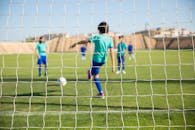
If your child has plenty of energy but struggles to sit still, share, listen, or stay focused, sports may help more than many parents expect. The Importance Of Sports For Kids goes far beyond exercise. For preschoolers and early elementary children, active play and simple sports experiences can support physical health, social skills, confidence, and even school readiness.
That matters for families and teachers who are trying to balance learning goals with real life. Children need chances to move, practice self-control, and build healthy habits. Sports give them a structured way to do all three while still feeling like fun.
Why the importance of sports for kids starts early?
Young children learn through movement. Before they can write neatly, sit through longer lessons, or follow multistep classroom routines, they need strong bodies and growing coordination. Running, kicking, throwing, balancing, and jumping all help develop gross motor skills, which are the larger body movements children rely on every day.
These skills do not stay on the playground. They support posture at a table, body control during circle time, and stamina for a full school day. A child who has regular opportunities to move often finds it easier to participate in classroom routines because their body is better prepared for them.
Early sports exposure also helps children get used to structure. Even a very simple game teaches them that there is a beginning, a few rules, a turn to wait for, and an ending. That pattern is valuable for preschool and kindergarten readiness because classroom learning works in much the same way.
1. Physical benefits that support everyday learning
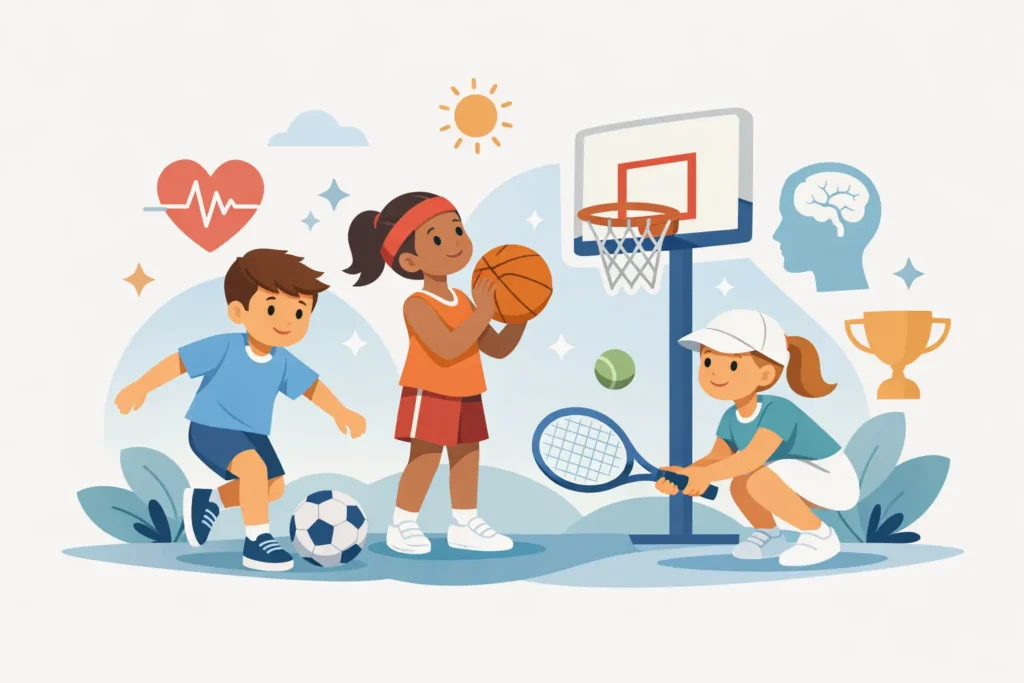
The most obvious benefit of sports is physical activity, but for young kids, the value is deeper than just “burning energy.” Regular movement helps strengthen muscles, improve balance, and build coordination. It also supports heart health, sleep quality, and healthy growth.
Parents often notice another benefit quickly: children who move their bodies well are often more comfortable trying new physical tasks. That could mean climbing stairs confidently, holding a proper seated position, or participating in recess without frustration. When a child feels physically capable, they are more likely to stay engaged.
Sports can also help reduce the effects of too much sitting and screen time. Many families are looking for practical ways to create healthier routines at home, and sports offer a strong answer. A soccer game in the yard, a beginner gymnastics class, or even backyard relay races can shift movement from an occasional event to a normal part of the week.
There is one important reminder here: not every child will enjoy the same type of sport. Some children love fast-paced team games, while others do better with swimming, martial arts, dance, or simple obstacle courses. The goal is not to force one activity. It is to help each child find a way to move that feels positive and manageable.
2. Sports build social and emotional skills
One reason parents and educators care about sports is that they create natural opportunities to practice social behavior. Young children are still learning how to take turns, manage disappointment, follow directions, and cooperate with others. Sports put those skills into action.
A child may need to wait patiently for a turn, listen when a coach explains a rule, or keep trying after missing a ball. Those are small moments, but they add up. Over time, children begin to understand that effort matters, mistakes are normal, and other people have needs too.
This is especially helpful for children who are still developing emotional regulation. Sports can teach them how to handle strong feelings in a supported setting. Losing a game, feeling nervous before participating, or becoming frustrated during practice are all chances to learn coping skills. With encouragement, children begin to recover more quickly and respond with greater flexibility.
Confidence grows here too. When a child learns to catch a ball, complete a race, or remember the rules of a game, they experience success in a visible way. That success can carry over into other parts of life. A child who feels capable on the field or playground may become more willing to try a new book, worksheet, or classroom task.
3. How sports can help with focus and school readiness
For young learners, movement and attention are closely connected. Children are not designed to sit still for long stretches without active breaks. Sports can improve focus because they help children practice listening, responding, and controlling their bodies.
Think about what happens during a simple game. A child has to watch what others are doing, remember instructions, and react at the right moment. That is a form of attention training, even if the child thinks they are just having fun.
Sports also support executive function, which includes skills like impulse control, working memory, and flexible thinking. These skills are important for early academics. A child uses executive function when following classroom directions, transitioning between tasks, or sticking with a challenge long enough to finish it.
This does not mean sports replace reading time, math practice, or hands-on learning. It means they support the foundation those skills depend on. For many children, active play actually makes learning time go more smoothly because their bodies and brains are better regulated.
The importance of sports for kids in a balanced routine
Sports are most helpful when they fit into a balanced routine instead of becoming another source of stress. Young children do not need packed schedules or high-pressure competition to benefit from movement. In fact, too much pressure can take the joy out of the experience.
For preschool and early elementary ages, simple and consistent usually works best. A weekly class, neighborhood play, family games, or school-based activities can all be enough to build skills. Children this age benefit more from positive exposure than from intense performance goals.
It also helps to keep expectations realistic. A four-year-old may not fully understand rules, and a six-year-old may still struggle with losing. That does not mean the activity is failing. It means they are learning. Adults can support that process by praising effort, improvement, and cooperation rather than only results.
When sports are approached this way, they become part of a healthy learning lifestyle. Just like story time supports literacy and simple math games support number sense, active sports and movement support whole-child development.
Choosing the right sports experience for young children
The best sports experience is one that matches a child’s age, temperament, and developmental stage. Some children enjoy organized teams right away. Others need a gentler start with parent-child classes, free play, or short skill-based sessions.
Look for signs that the activity is a good fit. Is your child mostly engaged, even if they are still learning? Are expectations age-appropriate? Does the environment feel encouraging instead of overly competitive? Those questions matter more than whether the sport seems impressive.
It is also worth paying attention to sensory needs and personality. A loud gym with constant transitions may be exciting for one child and overwhelming for another. A quieter activity like swimming or martial arts may feel more comfortable for children who need a calmer setting.
For families who want to keep costs low, sports do not have to mean expensive leagues or special equipment. Sidewalk chalk obstacle paths, bean bag toss, balloon volleyball, balance games, and backyard races can all teach similar early skills. At Kids Learning Journey, that idea fits naturally with how families already support growth at home: simple, purposeful activities often go further than parents think.
What parents and teachers can do to make sports more meaningful
Adults shape whether sports feel encouraging or stressful. Young children benefit most when the focus stays on participation, effort, and enjoyment. A supportive adult can help a child name feelings, celebrate progress, and keep trying after setbacks.
Before an activity, it helps to explain what to expect in simple language. During the activity, offer calm encouragement instead of constant correction. Afterward, talk about specific positives such as listening well, being brave, or practicing a new skill.
Teachers can use the same approach during recess, PE, or classroom movement games. Not every sports-based experience has to be formal. What matters is that children get chances to move, cooperate, and build confidence in a structured but playful way.
The bigger picture is simple. Sports help children grow stronger, more coordinated, more confident, and more socially aware. For young kids, that growth supports much more than physical health. It helps them learn, connect, and feel ready for the challenges of everyday life.