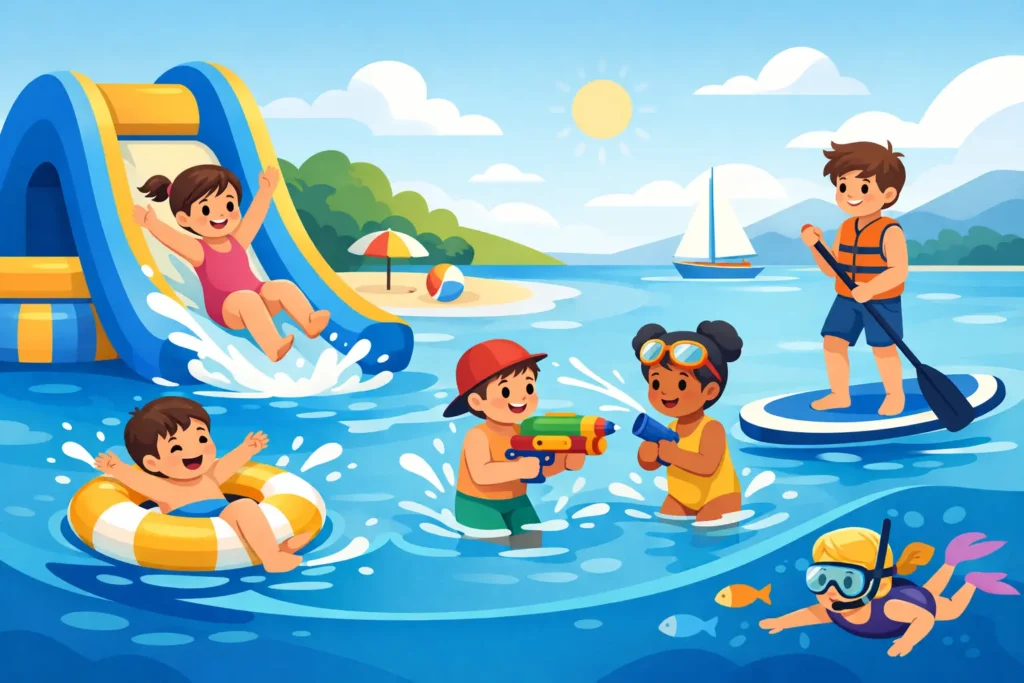
Hot afternoons can make kids restless fast, especially when the novelty of summer break starts to wear off. The good news is that water activities for kids in summer vacation can do more than cool children down – they can also build motor skills, early science understanding, language development, and creative thinking in ways that feel like pure fun.
For parents, homeschoolers, and teachers, the best summer activities are the ones that are easy to set up and actually hold a child’s attention. Water play does both. With a little structure, it becomes a meaningful learning opportunity for preschoolers and early elementary kids without feeling like another lesson.
Why water play matters in summer
Water play supports several important early childhood skills at the same time. When children pour, squeeze, scoop, and splash, they strengthen hand muscles and coordination. Those same small movements support later tasks like handwriting, cutting, and buttoning.
It also creates a natural setting for early math and science. Kids notice which containers hold more, what sinks or floats, and how fast water moves through funnels or tubes. Even simple questions like Which cup is fuller? or What do you think will happen next? help children practice observation, prediction, and vocabulary.
There is also a sensory benefit. Many young children regulate better when they have calming, hands-on play. On a long summer day, a bucket of water and a few simple tools can reset the mood for everyone.
How to make water activities more educational
Not every activity needs a formal lesson attached to it. Still, small changes can turn play into learning. You might ask your child to sort toys by color before placing them in water, count how many cups fill a container, or describe what feels cold, slippery, heavy, or light.
For older preschoolers and early elementary students, you can add simple challenges. Ask them to build a foil boat that holds five small objects, create a pouring station using different containers, or test which items absorb water. These little prompts encourage problem-solving without taking away the fun.
If you are working with more than one child, water play can also support social skills. Children practice taking turns, sharing tools, following directions, and talking through ideas together.
Easy water activities for kids in summer vacation
Some of the best summer water play ideas use items you already have at home or in the classroom. A sponge toss is a favorite because it is active, inexpensive, and adaptable for different ages. Younger children can simply soak and squeeze sponges into buckets. Older children can race to transfer water from one container to another. Along the way, they build grip strength and coordination.
A pouring station is another easy option. Set out measuring cups, bowls, funnels, spoons, and plastic bottles in a shallow bin or on the patio. Children naturally experiment with volume and movement. If you want to add literacy, write simple words like full, empty, pour, and spill on index cards and use them during play.
Toy washing is especially helpful for children who enjoy pretend play. Fill a tub with soapy water and let kids wash plastic animals, toy cars, or doll accessories. This works well for reluctant learners because it feels purposeful. You can extend the activity by sorting toys into groups, naming beginning sounds, or creating a short cleanup routine.
Water painting is simple but surprisingly engaging. Give children paintbrushes and cups of water and let them “paint” fences, sidewalks, brick walls, or patios. This is a great quiet-time option when kids need something calm. It also supports prewriting skills since children practice strokes, lines, circles, and letter shapes with no pressure.
A sink-or-float tub brings basic science to life. Gather safe household items like a spoon, leaf, small ball, cork, block, and plastic lid. Before placing each item in water, ask your child to guess what will happen. The real value is not getting the answer right. It is learning to observe, compare, and describe results.
Water games that build movement skills
Some children need active play more than table-based activities, especially in summer. Water games can meet that need while still supporting development.
A cup relay works well for siblings or small groups. Children carry water in cups from one bucket to another, trying to fill the second bucket first. This encourages balance, body control, and teamwork. For younger kids, you can make it non-competitive and simply focus on moving carefully.
Spray bottle target practice is another strong option. Draw letters, numbers, or shapes with sidewalk chalk, then let children spray the matching target you call out. This turns gross motor play into letter recognition or number review. If your child is working on phonics, you can say a sound and ask them to spray the letter that matches.
A sponge alphabet game blends movement and early literacy nicely. Write letters on the ground with chalk. Call out a letter or simple sight word, and have your child run, find it, and squeeze water over it. This kind of activity is especially helpful for kids who learn better through movement than sitting still.
Simple STEM ideas with water
Water play is one of the easiest ways to introduce STEM concepts to young children. You do not need a lab setup or expensive materials. You just need curiosity and a few good questions.
Try making boats from different materials such as foil, paper, craft sticks, or recycled containers. Ask which one floats best and which holds the most weight. Children can test small objects like buttons, pennies, or pebbles to see how much each boat can carry before sinking.
Another good option is a ramp-and-race activity. Use a gutter piece, plastic tray, or homemade ramp and pour water down it. Then test small floating items to see which moves fastest. Children begin noticing slope, speed, and force without needing formal vocabulary first.
You can also create an absorption test with paper towels, cloth, sponges, cotton balls, and napkins. Ask your child which material soaks up the most water. This encourages prediction, comparison, and basic recording skills. Older children can even draw their results.
Safety tips that matter
Water play should always be closely supervised, even with shallow bins or small tubs. Young children can slip, splash too roughly, or put unsafe items in their mouths. Adults should stay present and keep activities age-appropriate.
It helps to set a few simple rules before starting. Walk instead of run. Keep water low in tubs. Use only safe, child-friendly tools. Dry the area when finished. If you are outside, sunscreen, shade, and regular water breaks still matter, even when kids are playing with water.
There is also the reality that not every child enjoys getting soaked. Some children prefer gentle sensory play with cups and spoons, while others want full-body backyard games. It is okay to adjust. The goal is engaged, comfortable learning, not forcing one kind of play.
Making summer water play part of your routine
One reason parents give up on activities is that setup feels like too much work. A simple routine can help. Keep a small water-play bin with basics like measuring cups, funnels, sponges, plastic toys, and chalk ready to go. When the afternoon gets long, you already have what you need.
You can also rotate themes through the week. One day might focus on science experiments, another on letter games, and another on free sensory play. This gives children variety while keeping planning manageable. For families using educational resources from brands like Kids Learning Journey, water play can pair nicely with printable letter, math, or observation activities before or after outdoor time.
The biggest win is not creating a picture-perfect summer setup. It is giving children experiences that help them move, think, explore, and enjoy learning in a season that often needs a little extra structure. A few cups, a little water, and the right prompt can turn an ordinary summer afternoon into something both refreshing and genuinely useful.