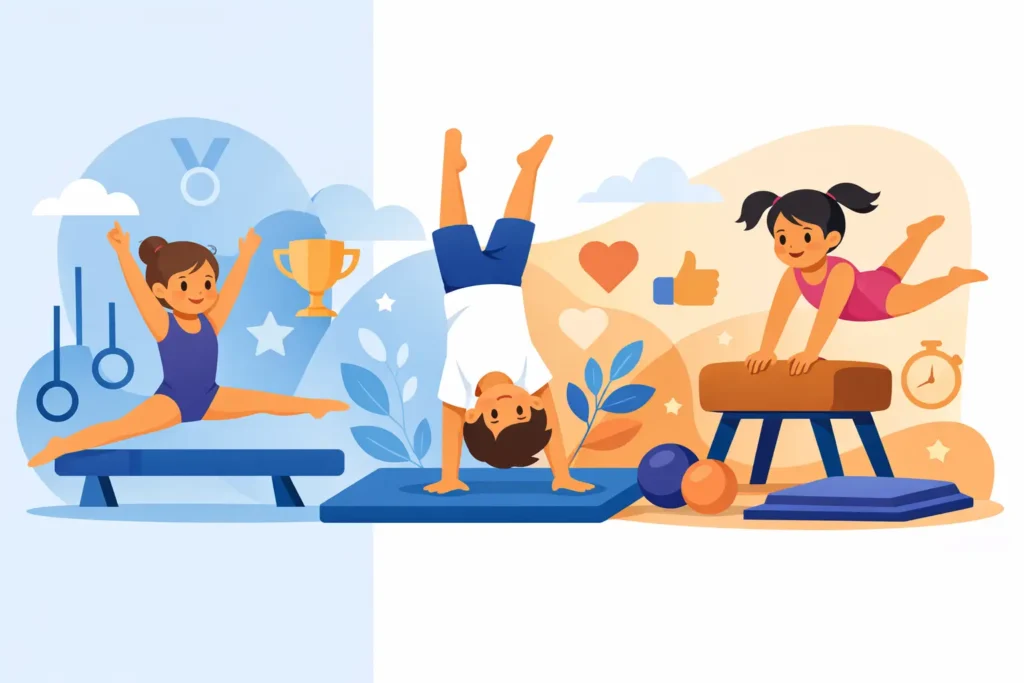
If your child is always climbing the couch, cartwheeling across the living room, or turning every open space into an obstacle course, gymnastics for kids might be a wonderful fit. It gives children a safe, structured way to use that energy while building strength, balance, coordination, and confidence. For many families, it also becomes a helpful alternative to more passive after-school time.
Gymnastics is often one of the first organized activities young children can join. That matters because early childhood is a key time for developing body awareness, listening skills, and confidence in trying new things. The goal is not to raise an Olympian. For most children, the real value is learning how to move with control, follow directions, and feel proud of steady progress.
Why gymnastics for kids is so valuable
Gymnastics supports whole-child development in a way that many parents appreciate once they see it in action. Children are not just learning tumbles or balance beam basics. They are practicing important physical and social skills at the same time.
On the physical side, gymnastics helps improve gross motor skills. Young children work on jumping, landing, rolling, balancing, swinging, and supporting their body weight. These movements strengthen muscles, improve flexibility, and teach coordination. Even basic class activities can help children feel more comfortable and capable in their own bodies.
There are also cognitive benefits. Gymnastics routines require children to listen, remember steps, and follow sequences. A coach might say, “Jump, tuck, roll, and stand.” For a preschooler or kindergartener, that is real practice in attention, memory, and self-control. These are the same skills children use in early learning settings when they follow classroom directions or complete multi-step tasks.
Emotionally, gymnastics can be a strong confidence builder. Children learn that progress comes little by little. A child may not be able to do a forward roll the first week, but with practice, they improve. That experience teaches persistence in a very concrete way.
What age can kids start gymnastics?
Many gymnastics programs welcome children as young as 18 months in parent-and-child classes. These early classes are usually playful and movement-based. They focus on climbing, balancing, jumping, and basic coordination rather than formal skill instruction.
Around ages 3 to 5, children can often join beginner classes with more structure. This is a common starting point because many preschoolers are ready to participate in a group, follow simple directions, and move through stations with support. They are still learning through play, but classes begin to introduce foundational skills in a more organized way.
By ages 6 and up, many children are developmentally ready for more focused instruction. At this stage, they may work on skills like cartwheels, bridges, handstands, and beginner routines. That said, there is no perfect age that fits every child. Some children are ready early, while others do better when they are a bit older and more comfortable in group settings.
If your child is hesitant in new environments, has trouble separating from you, or becomes overwhelmed by noise and activity, waiting a little longer may lead to a better first experience. On the other hand, if your child loves movement and responds well to structured play, an early beginner class can be a great match.
Benefits of gymnastics beyond the gym
One of the best things about gymnastics is how often the skills transfer into everyday life. A child who practices balance, coordination, and body control in class may also become more confident on the playground, in dance, in soccer, or even during simple outdoor play.
Gymnastics can also support school readiness in unexpected ways. Children practice taking turns, waiting patiently, listening to an adult instructor, and moving from one task to another. Those are valuable habits for preschool and early elementary classrooms.
For families trying to reduce screen time, gymnastics gives children active, purposeful movement. Instead of asking them to “just go play,” you are giving them a structured outlet that feels exciting and rewarding. For many children, that combination of fun and routine is exactly what keeps them engaged.
How to know if gymnastics is a good fit for your child
Not every child is drawn to team sports, and that is completely okay. Gymnastics can be especially appealing to children who enjoy movement, climbing, spinning, or practicing a skill until they get it right. It also works well for children who like clear routines and visible progress.
At the same time, some children need a slower start. A busy gym with loud music and lots of equipment can feel overwhelming. If that sounds like your child, look for a beginner program with small class sizes and patient instructors. A trial class can help you see whether the environment feels encouraging or overstimulating.
It is also helpful to think about your child’s goals. If you want an activity that supports physical development, focus, and confidence, gymnastics can be an excellent option even if your child never competes. Recreational classes often give children all the benefits without the intensity of a competitive track.
Choosing the right gymnastics class
The best gymnastics class is not always the one with the biggest gym or the most advanced equipment. For young children, the quality of instruction matters most.
Look for coaches who are warm, organized, and experienced with preschool or early elementary students. Young children need more than technical instruction. They need teachers who know how to keep lessons moving, give clear directions, and support nervous beginners without pressure.
A strong beginner class should feel structured but playful. Children should spend most of their time moving, not standing in long lines. Equipment should be sized appropriately for young learners, and safety rules should be easy to see in practice, not just listed on paper.
It is also worth asking how the program handles skill progression. Good programs break skills into small, manageable steps. They do not rush children into advanced moves before they are ready. That steady approach is safer and usually builds more confidence in the long run.
Safety tips parents should know
Safety is one of the biggest concerns families have, and rightly so. The good news is that beginner gymnastics programs are designed with safety in mind when they are properly supervised.
Children should always learn in a class led by trained instructors, using age-appropriate mats and equipment. Basic skills like rolls, handstands, and jumps may look simple, but they still need careful teaching and spotting when appropriate.
Parents can help by choosing fitted clothing, tying back long hair, and making sure children attend class rested and ready to listen. It also helps to talk positively about trying new things without pushing too hard. A child who feels pressured may take unsafe risks or become discouraged.
At home, it is wise to set boundaries around practicing gymnastics moves on furniture or hard surfaces. Children often want to show what they learned, which is wonderful, but home practice should stay simple and safe. Stretching, animal walks, balance games, and gentle movement activities are much safer than unsupervised flips or tumbling tricks.
Simple ways to support gymnastics skills at home
You do not need professional equipment to help your child build the foundational skills used in gymnastics. In fact, many helpful activities are easy to include in playtime.
Animal walks such as bear walks, crab walks, and frog jumps build strength and coordination. Walking along a line of tape on the floor can improve balance. Jumping from one pillow to another helps with body control and landing. Even simple games like freeze dance support listening and movement control.
This is where movement and learning can work beautifully together. You can count jumps, practice positional words like over and under, or add alphabet cards to a movement path. For families who already use playful learning routines, this kind of crossover activity fits naturally into the day.
Recreational vs. competitive gymnastics
Many parents worry that signing up for gymnastics means entering a highly competitive world. That is not the case. Most young children begin in recreational classes, which focus on fun, skill-building, and general fitness.
Competitive gymnastics usually comes later and only for children who show both interest and readiness. It involves more practice hours, greater commitment, and a stronger focus on performance. For some families, that path is exciting. For others, recreational classes provide exactly the right balance.
There is no wrong choice here. The best option depends on your child’s personality, schedule, and enjoyment. A child can gain strength, confidence, and coordination without ever joining a team.
When gymnastics may not be the right choice right now
Even a great activity may not be the best fit in every season. If your child is highly anxious in group settings, recovering from an injury, or strongly resistant after multiple tries, it may help to pause and revisit later. Children change quickly, and readiness often improves with time.
You can still build many of the same skills through playground time, dance, swimming, or simple movement games at home. The bigger goal is helping your child grow stronger, more coordinated, and more confident in ways that feel positive and manageable.
For many families, gymnastics becomes more than an extracurricular. It becomes a place where children learn to try, wobble, fall safely, and try again. That kind of growth reaches far beyond the mat.