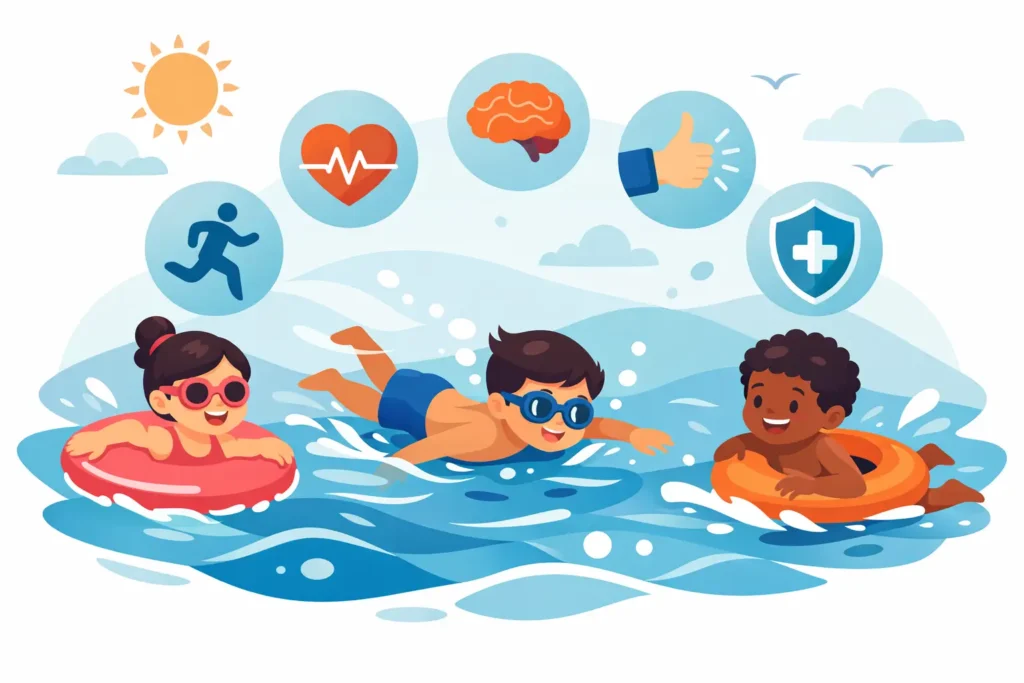
If your child has energy to spare, struggles to focus, or needs more confidence in new situations, swimming can help in more ways than many parents expect. The benefits of swimming for kids go far beyond learning how to float or paddle. For preschoolers and early elementary children, time in the water can support physical development, emotional growth, and even school readiness.
Swimming is one of those rare activities that feels like pure fun to kids while building important life skills in the background. That matters for families and teachers who want screen-free activities that are active, structured, and genuinely worthwhile.
Why swimming is so valuable for young children
Unlike many sports, swimming works the whole body without putting heavy stress on growing joints. Young children are still building coordination, balance, and body awareness, and water gives them a safe environment to practice all three. Kicking, reaching, turning, and staying upright in the water all strengthen large muscle groups while improving control.
That full-body movement also supports stamina. A child who swims regularly is often building cardiovascular endurance without realizing it, because play and skill practice keep the activity engaging. For children who do not enjoy traditional team sports, swimming can be a more comfortable way to stay active.
Physical benefits of swimming for kids
One of the biggest benefits of swimming for kids is how many foundational motor skills it supports at once. Children use both sides of the body together, cross the midline, and coordinate breathing with movement. Those are big developmental tasks for young learners.
Swimming can help improve:
- Balance and coordination
- Core strength and posture
- Endurance and overall fitness
- Body awareness and motor planning
- Flexibility and range of motion
These skills can carry over into daily life. A child with better core strength and coordination may sit more comfortably during table work, participate more confidently in playground games, and manage other physical tasks with less frustration.
Swimming builds confidence and independence
Many children feel proud when they master a new swimming skill. Putting their face in the water, floating on their back, or moving across the pool without help can feel like a major accomplishment. That success builds confidence in a very real, visible way.
For some children, swimming also teaches patience and persistence. Progress does not happen all at once. Kids learn that small steps matter, and that practice leads to improvement. That mindset supports learning in other areas too, whether they are sounding out new words, writing letters, or working through early math challenges.
There is also an independence piece. As children become safer and more capable in the water, they often feel more secure trying new activities in general. They begin to trust their own growing abilities.
Water safety is a life skill
This may be the most practical reason families prioritize swim lessons. Swimming is not just a recreational activity. It is a safety skill.
Children do not become fully water-safe after a few lessons, and supervision is always necessary. Still, learning how to float, reach the side, follow pool rules, and stay calm in the water can reduce risk and prepare children to respond better in water-related situations. For families who spend time around pools, lakes, or beaches, that knowledge is especially valuable.
Cognitive and emotional benefits
Swimming can support more than physical development. It also helps many children regulate their bodies and emotions. Water provides steady sensory input, which some children find calming and organizing. That can be helpful for kids who seem constantly on the move or who have trouble settling into quieter tasks later.
Following swim instruction also strengthens listening skills and attention. Children learn to watch, imitate, remember steps, and respond to cues. In a gentle way, swimming asks them to focus, manage their impulses, and keep trying even when something feels hard at first.
Parents often notice that children sleep better, eat better, and feel more emotionally balanced when regular movement is part of the week. Swimming can be a strong fit because it combines exercise, routine, and enjoyment.
Social growth in swim lessons
Group lessons give children a chance to practice waiting, taking turns, and following directions in a shared setting. Those are the same kinds of skills that support classroom success.
Swimming can also help shy children warm up socially. Because the activity is structured, there is less pressure to make conversation or invent a game on the spot. Kids can connect through shared participation, cheering each other on, and celebrating progress.
What parents should keep in mind
Not every child loves the water right away, and that is okay. Some need a slower start, a familiar instructor, or extra time to feel comfortable. The goal is steady progress, not pressure.
It also helps to choose age-appropriate lessons. Preschoolers usually learn best through short, playful instruction, while older children may be ready for more direct skill building. If your child is sensitive to noise, cold, or new environments, preparing them ahead of time can make the experience smoother.
For families focused on whole-child development, swimming fits beautifully alongside early learning routines. Just like hands-on literacy games or simple math practice, it gives children a chance to grow through repetition, structure, and encouragement. When an activity supports health, confidence, focus, and safety all at once, it earns a meaningful place in the week.