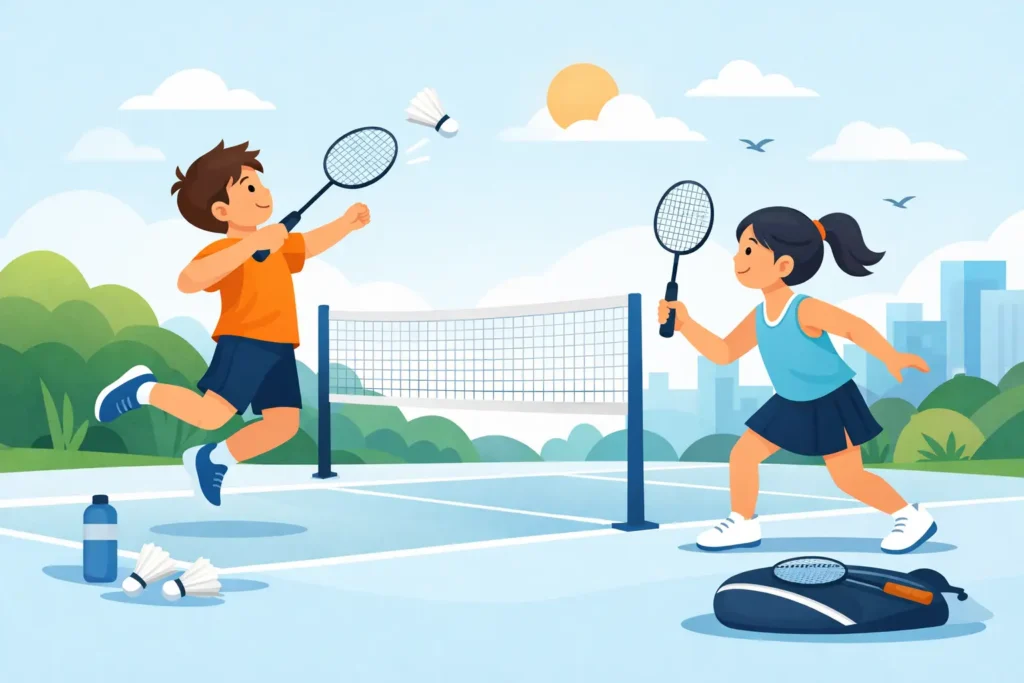
If your child has energy to spare, needs a break from screens, or seems to lose interest in more structured sports, badminton may be a better fit than you expect. The benefits of playing badminton for kids go far beyond simple exercise. This fast, light racket game can support coordination, focus, confidence, and social growth while still feeling fun and low-pressure for young children.
For parents and teachers, that matters. Many kids need movement that is easy to start, affordable to try, and flexible enough for a backyard, gym, driveway, or school play area. Badminton checks all of those boxes. It can be playful for beginners, but it also offers plenty of room for children to build real skills over time.
Why badminton works so well for children
Some sports ask a lot from kids right away. They may need advanced teamwork, strong throwing skills, or the confidence to handle rough physical contact. Badminton is different. Because the shuttlecock moves more slowly than a ball in many situations and can be hit gently back and forth, children often find early success faster.
That early success is a big reason kids stick with an activity. When a child can rally a few shots, laugh through mistakes, and improve without feeling overwhelmed, they are more likely to stay engaged. For younger children especially, that sense of progress can make physical activity feel rewarding instead of frustrating.
Badminton also works across a wide range of ages and skill levels. A preschooler can practice simply hitting the shuttle into the air. An early elementary student can work on footwork, balance, and taking turns. Older kids can begin learning rules, scoring, and strategy. That makes it useful for families with siblings or mixed-age groups in a classroom or homeschool setting.
Physical benefits of playing badminton for kids
One of the clearest benefits of playing badminton for kids is how much physical development it supports in a short amount of play. Children run, reach, twist, step sideways, and track a moving object at the same time. Those actions build whole-body coordination in a very natural way.
Hand-eye coordination improves because children must watch the shuttle carefully and time their swing. This is a valuable foundational skill that supports many other activities too, including catching, writing, drawing, and even early classroom tasks that require visual tracking. While badminton is not a handwriting lesson, the body control it encourages can still support broader motor development.
Balance and agility also get a workout. Kids learn to shift their weight, stop and start quickly, and move in different directions without falling off track. For children who seem clumsy or hesitant during active play, badminton can be a gentle way to practice these skills.
Then there is stamina. Even short rounds of badminton keep children moving. They may not notice how much exercise they are getting because the game feels playful. That makes it a helpful option for families trying to encourage more active habits without turning every movement break into a chore.
It is worth noting that the level of physical challenge depends on how the game is played. A casual backyard rally offers light movement, while a more competitive match can be a stronger cardio workout. That flexibility is part of what makes badminton so family-friendly.
Badminton helps build focus and listening skills
Parents often look for activities that strengthen both body and mind. Badminton does that well because kids must pay attention in the moment. They watch where the shuttle is going, judge how fast it is falling, and decide when to move or swing. That kind of active focus can be especially helpful for children who need practice staying engaged.
There is also a listening component. When adults teach simple rules like ready position, waiting for a turn, serving underhand, or aiming over the net, children have to listen and respond. In a school or group setting, this supports following directions and learning routines.
Because badminton is easy to break into short practice goals, it can also teach persistence. A child may start by trying to hit the shuttle once, then three times, then rally with a partner. Small wins add up. This helps children see that improvement comes through practice, which is a valuable mindset for learning in every subject.
Social and emotional benefits
Not every child enjoys loud, high-contact team sports. Some do better with an activity that still includes another person but feels less intense. Badminton can be a great middle ground. Kids get the social benefits of playing with others while avoiding some of the pressure that comes with larger competitive games.
When children play badminton together, they practice turn-taking, patience, and encouragement. They learn how to handle missing a shot and how to keep going after mistakes. Those moments may seem small, but they help build resilience.
Confidence is another major benefit. For many kids, especially beginners, badminton feels approachable. The equipment is lightweight, the court can be adjusted, and the game can be simplified. A child who struggles in other sports may discover, sometimes to their surprise, that they are good at this one. That positive experience can improve their willingness to try new physical and learning activities.
There is also an emotional regulation benefit. Active play gives children a healthy outlet for stress, restlessness, and big feelings. A few rounds of movement outdoors or in a gym can shift a child’s mood in a meaningful way. For families working to reduce screen time and improve daily routines, that is a practical win.
A smart screen-free activity for home or school
One reason badminton fits so well with early childhood routines is that it does not have to be complicated. You do not need a full court or advanced coaching to get started. A simple open space and a beginner-friendly racket set are often enough.
That makes badminton useful for movement breaks, physical education, recess, homeschool schedules, or family play after school. It can be structured, but it does not have to be. Some days children may enjoy a real game. Other days they may simply tap the shuttle up in the air, aim at a target, or practice serving.
This flexibility matters because young children do not always want one fixed format. A child who resists formal sports lessons may still happily play badminton as a game. Parents and educators can build skill development into that play without making it feel overly serious.
At Kids Learning Journey, that blend of fun and purposeful growth is exactly what many families are looking for. Children learn best when an activity feels engaging, achievable, and connected to real development.
What kids learn beyond the game
Badminton teaches more than racket skills. It introduces children to rule-following, self-control, and sportsmanship in a simple way. They begin to understand boundaries, scoring, fairness, and what it means to play respectfully.
There are thinking skills involved too. Even young children start to notice patterns. They learn that hitting too hard sends the shuttle too far. They see that standing still makes it harder to return a shot. They adjust, try again, and problem-solve through movement.
These are meaningful learning experiences, especially for early elementary children who are developing independence and self-awareness. In that sense, badminton can support whole-child development. It encourages physical growth, yes, but it also strengthens habits that matter in the classroom and at home.
A few things to keep in mind
Badminton is beginner-friendly, but expectations should still match a child’s age and stage. Preschoolers may not be ready for full games or formal scoring. They often do best with short, playful practice and lots of encouragement. Early elementary children can usually handle more structure, but they still benefit from simple instructions and frequent breaks.
Equipment size matters too. Adult rackets may feel too heavy or awkward for smaller children. A lightweight racket designed for kids is easier to manage and more likely to lead to success.
It also helps to focus on enjoyment before technique. Good form can come later. If a child is having fun, moving their body, and building confidence, the activity is already doing important work.
Should your child try badminton?
If you want an activity that supports fitness, focus, coordination, and confidence without requiring a huge commitment, badminton is a strong option. It works well for energetic kids, hesitant beginners, siblings of different ages, and families trying to add more meaningful movement into the week.
The best part is that children do not need to be advanced athletes to enjoy it. They just need space to try, room to improve, and an adult who is willing to keep it light and encouraging. Sometimes the simplest games end up offering the biggest benefits.