Rainy afternoon, cold weather, or just too much screen time? Indoor games for kids can do more than fill the day. The right games help young children practice listening, letter recognition, counting, movement, and self-control while still feeling like play.
For parents and teachers of preschoolers and early elementary kids, that balance matters. You want activities that are easy to set up, affordable, and actually useful. The ideas below work well at home, in a classroom, or during homeschool time, and most use supplies you already have.
Why indoor games for kids matter
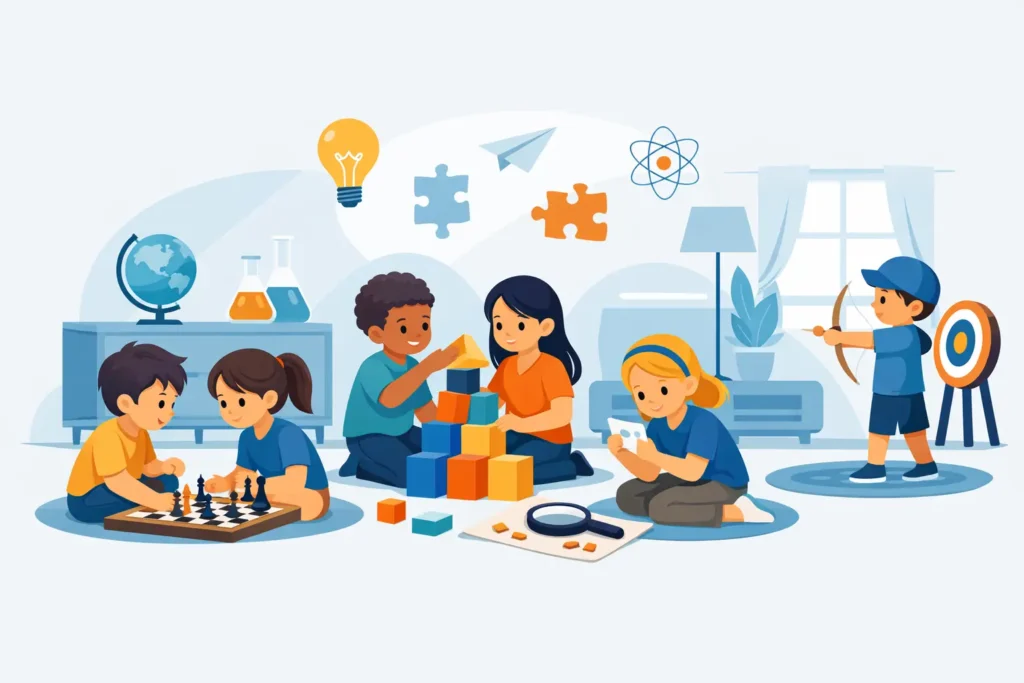
Indoor play does not have to mean passive play. Simple games can build early academic and developmental skills when they include turn-taking, memory, problem-solving, and movement. That is especially helpful for young children who learn best through hands-on repetition.
Indoor games also solve a real daily challenge. When children are stuck inside, behavior often gets harder before it gets better. A game with a clear goal gives them structure, helps them focus, and turns extra energy into something productive.
12 indoor games for kids that support learning
Simon Says is a classic for a reason. It strengthens listening skills, attention, and body awareness. You can make it more educational by adding directions like, “touch something blue,” “hop three times,” or “find a shape with corners.”
Letter sound hunt works well for preschool and kindergarten ages. Hide magnetic letters, index cards, or paper letters around the room. When your child finds one, ask for the letter name and sound. If you are working on early reading, this pairs nicely with How to Teach Letter Sounds That Stick.
Pillow path is great for kids who need movement. Lay out pillows, tape lines, or cushions and create a simple obstacle course. Add learning prompts at each stop, such as naming a number, rhyming a word, or counting to ten before moving on.
Mystery bag is perfect for sensory learning. Place a few household items in a bag and let children feel one item at a time without looking. They describe what they notice and guess what it is. This builds vocabulary, observation, and confidence speaking out loud.
Roll and count is easy to set up with one die and small toys or blocks. A child rolls, counts the dots, and moves that many spaces or adds that many blocks to a tower. For children still learning number identification, 12 Number Recognition Activities for Preschoolers offers more simple ways to practice.
Freeze dance helps with self-control and listening. Play music, let kids dance, then pause the music unexpectedly. When the music stops, everyone freezes. For younger children, keep rounds short. For older kids, add challenges like freezing in a shape or balancing on one foot.
Color sorting race works especially well for toddlers and young preschoolers. Use pom-poms, blocks, paper squares, or socks and ask children to sort them into bowls by color. You can also sort by size or shape to add another layer of thinking.
Rhyming match turns early literacy into a game. Say a simple word like cat and ask children to find or think of something that rhymes. You can use picture cards, toys, or just oral play. If your child enjoys this, 8 Rhyming Words Games for Preschoolers gives you more playful practice.
Balloon tap is a low-mess way to burn energy indoors. Keep a balloon in the air using hands only, or call out a rule like “tap it five times” or “tap it with your elbow.” This supports coordination and following directions. Just skip it around breakables or with children who get overstimulated easily.
Treasure clue game adds problem-solving to indoor play. Hide a favorite toy or small prize and give simple picture or verbal clues. For beginning learners, clues can include colors, shapes, or location words like under, behind, and next to.
Build and copy is excellent for spatial skills. Make a simple tower or pattern with blocks, cups, or LEGO pieces, then ask your child to copy it. Start with two or three pieces and make it harder over time. This game quietly builds attention to detail.
Animal walk challenge is a fun choice when kids are restless. Call out movements like bear walk, frog jump, crab walk, or slither like a snake. Add counting, letter sounds, or sight words between each move to stretch the learning.
How to choose the right game
The best indoor games match your child’s age, energy level, and current learning needs. A child who is wiggly may do better with movement games first, then a quieter activity like mystery bag or build and copy. A child who gets frustrated easily may need games with quick wins and fewer rules.
It also helps to rotate your choices. If every game feels like school, children may resist. Try mixing one skill-based game with one just-for-fun movement game. That balance keeps learning light and sustainable.
Keep setup simple and expectations realistic
You do not need a Pinterest-perfect play area to make indoor learning meaningful. Painter’s tape, paper cards, pillows, cups, dice, and a balloon can carry you through a full week of screen-free fun. If you want even more easy ideas for home, 21 Screen Free Activities for Kids is a helpful next stop.
Some days a game will last 15 minutes. Other days it may only last 4. That is still a win. Short, repeatable games often work better for young children than long activities with too many steps.
When indoor time feels long, think less about keeping kids busy and more about giving them a playful path to practice. One simple game can build far more than a few quiet minutes. It can build confidence, connection, and real early learning skills.