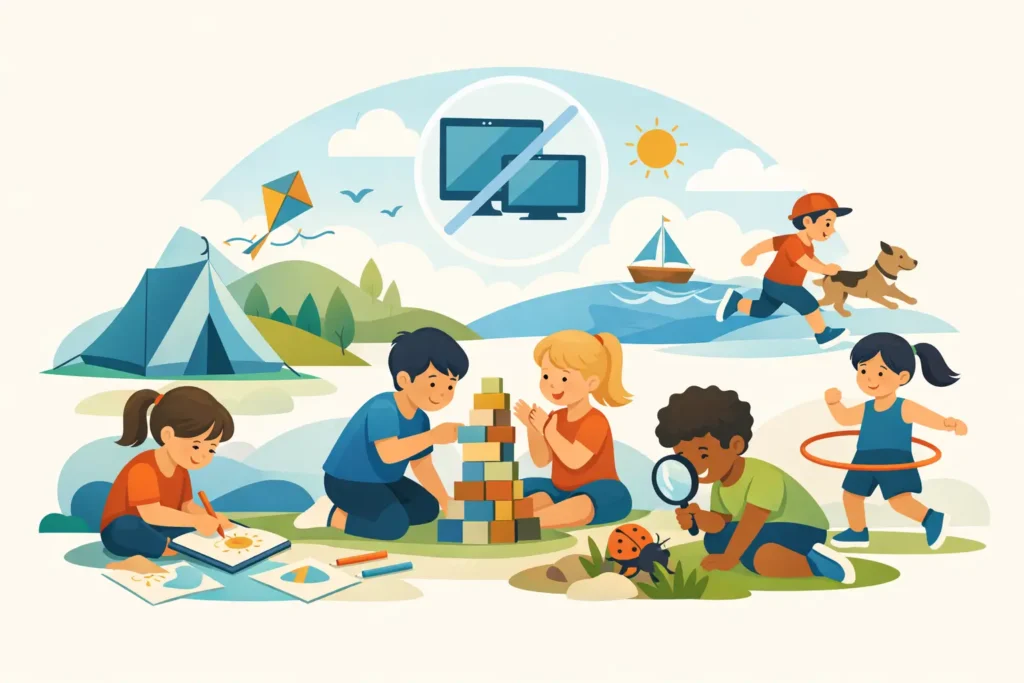
Some days, turning off the tablet feels less like a parenting choice and more like a negotiation. If you’re looking for screen free activities for kids that keep little hands busy and growing minds engaged, it helps to think beyond simple entertainment. The best activities do double duty – they reduce screen time while building skills your child actually needs.
For preschoolers and early elementary kids, that usually means a mix of movement, creativity, early literacy, math thinking, and independent play. It does not have to be complicated, expensive, or Pinterest-perfect. In fact, the activities children return to most often are usually the simplest ones with a clear purpose.
Why screen free activities for kids work so well
Screens are not automatically bad, and most families use them at times for learning, rest, or convenience. But when screen time starts filling every quiet moment, children miss chances to practice important real-world skills. They need time to talk, move, imagine, solve problems, and tolerate a little boredom.
That is where offline play becomes especially valuable. A child who sorts buttons by color is practicing early math. A child who retells a story with stuffed animals is building language. A child who helps measure flour in the kitchen is getting hands-on experience with numbers, sequencing, and fine motor control.
The goal is not to create a perfect screen-free home. It is to make it easier for children to step into meaningful play and learning when the screen is off.
Start with activities that match your child’s age and energy
One reason some offline ideas flop is that they do not match the moment. A child who has been sitting all morning may need movement before they can focus on a quiet table task. A tired preschooler may enjoy sensory play far more than a writing activity. When you choose well, resistance usually goes down.
For younger children, open-ended materials often work best. Think blocks, play dough, crayons, magnetic letters, simple puzzles, and dramatic play props. For kindergarten and early elementary ages, kids often enjoy a bit more structure, especially if the activity feels like a game rather than extra schoolwork.
Literacy-based activities that feel like play
If you want screen-free time to support school readiness, literacy is a natural place to start. Young children learn best when reading and writing skills are woven into playful routines instead of presented as drills.
Build a letter hunt around the room
Write letters on sticky notes and place them around the house or classroom. Ask your child to find a specific letter, match uppercase to lowercase, or name a word that starts with that sound. This works well for preschool and kindergarten because it adds movement to letter recognition.
You can make it easier by focusing on letters in your child’s name. You can make it harder by asking for beginning sounds or simple word building with the letters they collect.
Set up a storytelling basket
Fill a basket with a few simple objects like a toy animal, a scarf, a spoon, a block, and a small notebook. Invite your child to make up a story using the items. Some children prefer to tell the story out loud, while others like to draw the beginning, middle, and end.
This kind of play supports vocabulary, sequencing, comprehension, and confidence with spoken language. It is especially helpful for children who are not yet ready to write full sentences but have plenty to say.
Use tracing and copywork in short bursts
Not every screen-free activity has to look like free play. Some children enjoy brief, structured tasks when they are clear and manageable. Alphabet tracing, name writing, or copying one short sentence can be a strong choice if you keep it short and encouraging.
For families who like ready-to-use practice, printable resources from Kids Learning Journey can make this easier without adding planning time. The key is balance. A few focused minutes often work better than pushing until your child is frustrated.
Hands-on math activities for everyday learning
Math tends to stick better when children can see and touch it. That is one reason simple household materials are so useful.
Count, sort, and compare
Gather small objects like pom-poms, coins, toy cars, or cereal pieces. Ask your child to sort by size, shape, or color. Then count each group and compare which has more or less. These early math concepts matter just as much as rote counting.
If your child is ready, add simple addition and subtraction stories. For example, if there are five buttons and two roll away, how many are left? The learning feels natural because the materials are right in front of them.
Make a shape scavenger hunt
Invite children to find circles, squares, rectangles, and triangles around the house or classroom. A clock, window, book, and snack cracker can all become part of the lesson. This works well for active kids who resist sitting still.
You can extend the activity by having your child draw the shapes they found or build them with craft sticks. That extra step helps reinforce the concept.
Try simple cooking math
Baking or making snacks is full of early math practice. Children can count scoops, compare measurements, notice patterns, and follow steps in order. They also practice listening and fine motor skills at the same time.
The trade-off is mess and supervision. If you need something truly independent, this may not be your first choice. But for one-on-one learning time, it is hard to beat.
Creative screen free activities for kids that build focus
Creativity gives children room to experiment without worrying about a right answer. That matters, especially for kids who are used to fast-paced digital entertainment.
Keep an open art tray ready
A small bin with paper, crayons, child-safe scissors, glue, and a few recycled materials can go a long way. Instead of directing every project, try offering a simple prompt such as, “Can you make a house for a tiny animal?” or “Can you create a picture using only circles and lines?”
This approach encourages independence and problem-solving. It also helps children practice sticking with an idea from start to finish.
Use play dough with a learning twist
Play dough is excellent for strengthening hand muscles needed for writing. You can keep it playful while still adding learning goals. Ask children to roll letters, make numbers, create shapes, or build items that begin with a certain sound.
This is a strong option for children who need sensory input or who avoid paper-and-pencil tasks.
Movement-based ideas for high-energy days
Sometimes what looks like boredom is really pent-up energy. In those moments, the best answer is not a worksheet. It is movement with a little structure.
Create a simple obstacle course
Use pillows, tape lines, chairs, and baskets to build a path for jumping, crawling, balancing, and tossing. Children can follow directions like “hop to the letter A” or “take three giant steps to the red basket.” That adds listening and counting to the activity.
Obstacle courses are especially useful during bad weather or long afternoons indoors. They burn energy without requiring special equipment.
Play action rhyme and song games
Songs with motions, fingerplays, and call-and-response games support memory, rhythm, and language development. They are ideal for preschool classrooms, sibling groups, or transitions between activities.
If your child seems restless and unfocused, a few minutes of movement songs can reset the mood better than trying to force quiet concentration.
Quiet-time activities that encourage independence
Not every parent or teacher needs a high-engagement project. Sometimes you simply need children productively occupied for a little while.
Independent screen-free options work best when they are familiar and easy to access. Rotation helps. If everything is always available, children may overlook it.
A few reliable choices include puzzles, lacing cards, sticker scenes, building blocks, magnetic tiles, felt boards, and simple journal prompts. You do not need a huge collection. A smaller set of well-chosen materials often leads to deeper play.
It also helps to lower expectations. Independent play is a skill, not a switch. Some children can start with ten minutes and gradually build from there.
How to make screen-free time easier at home or in class
The biggest mistake is waiting until a child is already bored, cranky, and asking for a device. A little preparation changes everything.
Keep a few activity bins within reach, and group them by type – art, literacy, math, sensory, or building. Rotate materials every week or two so they feel fresh. If your child does better with predictability, create a simple routine like outdoor play after breakfast, table activity before lunch, and quiet reading in the afternoon.
It also helps to think in seasons. On busy days, choose low-prep activities you can pull out in under five minutes. On slower days, try projects that need more setup, like baking, painting, or collaborative building. You do not need every activity to be educational in an obvious way. Children are still learning when they pretend, explore, and create.
Most of all, give yourself room to adjust. Some screen free activities for kids will become favorites. Others will last five minutes and flop. That does not mean you are doing it wrong. It usually just means your child needs a different level of challenge, more movement, or a simpler starting point.
When you offer children meaningful things to do with their hands, words, and imaginations, screen-free time starts to feel less like a restriction and more like a rhythm they can grow into.