A child who can spot that cat and hat sound alike is doing more than playing with words. They are building one of the early literacy skills that supports later reading success. That is why phonological awareness activities preschool children can enjoy every day matter so much. These simple listening games help young learners hear the parts of spoken language before they are expected to match sounds to letters.
If you are a parent, homeschooler, or preschool teacher, this can feel encouraging. You do not need a complicated reading program to get started. In preschool, phonological awareness grows best through short, playful moments – songs, clapping, silly word games, and repeated practice woven into the day.
What phonological awareness means in preschool
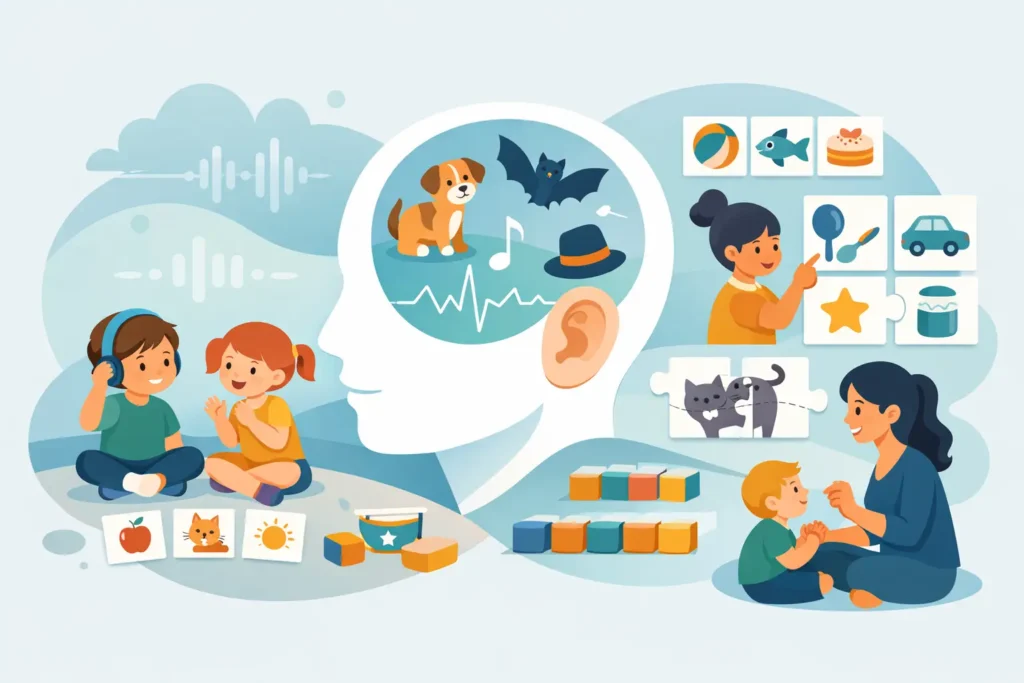
Phonological awareness is the ability to hear and work with the sounds in spoken words. It includes noticing rhymes, hearing syllables, recognizing when words begin with the same sound, and eventually isolating and blending individual sounds.
It helps to separate this from phonics. Phonological awareness is all about listening and speaking. Phonics connects sounds to printed letters. Preschoolers usually benefit from starting with sound play first, because hearing language patterns makes letter learning easier later on.
This skill develops in stages, and that matters when you choose activities. Many young children begin with larger chunks of sound, like whole words in a sentence or syllables in a word. Hearing individual phonemes, or the smallest units of sound, often comes later. So if a child can clap pumpkin into two parts but cannot tell you the first sound in sun, that is very normal.
How to use phonological awareness activities preschool children will stick with
The best activities are short, consistent, and joyful. Five minutes is often enough. Preschoolers learn more from repeating a familiar game over several days than from doing one long lesson once a week.
It also helps to keep expectations realistic. Some children love group songs and call-outs. Others do better one on one during snack time, car rides, or clean-up. If a child is tired or frustrated, scale the activity back. Success builds confidence, and confidence keeps children willing to try again.
12 phonological awareness activities preschool kids enjoy
1. Rhyme match
Say two words and ask if they rhyme. Start with obvious pairs like cat and hat or dog and log. Then mix in non-rhyming words such as cat and cup. Keep it playful and exaggerate the ending sounds so children can hear the pattern.
For some preschoolers, generating a rhyme is much harder than recognizing one. That is a useful trade-off to remember. If your child cannot think of a rhyming word yet, that does not mean the skill is not developing.
2. Nursery rhyme pause game
Recite a familiar nursery rhyme and pause before the rhyming word. Let the child fill it in if they can. This works well because the rhythm and repetition give extra support.
Even children who are not ready to answer independently are still learning by listening. Repeated exposure counts.
3. Clap the syllables
Choose simple words from everyday life and clap the beats. You might clap ap-ple, ta-ble, pen-cil, and ba-na-na. Children quickly begin to feel that words can be broken into parts.
Movement makes a difference here. If clapping does not hold attention, try tapping blocks, jumping, or patting knees instead.
4. Name chant
Use children’s names to build sound awareness. Clap Jes-si-ca, Mi-les, or Em-ma. Then talk about which names are long and which are short.
This works especially well in classrooms, but it is just as useful at home with family names, pets, or favorite characters.
5. Beginning sound hunt
Pick one sound, like /m/, and look around the room for objects that begin with that sound. Mug, map, mat, marker. Keep the focus on the sound you hear, not the letter name.
This activity is helpful once children are comfortable with rhymes and syllables, but some preschoolers can try it earlier. It depends on their language development and how much exposure they have had to sound play.
6. Silly alliteration time
Make playful phrases like messy monkeys, big bears, or silly snakes. Preschoolers often laugh at these combinations, and that laughter helps the learning stick.
You can turn this into a transition game by saying, “Who wants to be a hopping helper?” or “Let’s be tidy tigers while we clean up.”
7. Sound sorting by listening
Gather a few objects or picture cards. Choose two beginning sounds, such as /b/ and /s/, and have children sort the items by the sound they hear at the start. Ball goes with /b/. Sock goes with /s/.
Keep the set small at first. Too many choices can make the task feel confusing rather than fun.
8. Robot talk blending
Say a simple word in stretched-out sounds, like /s/ /u/ /n/, and ask the child to guess the word. Preschoolers usually enjoy the robot voice, which makes this activity feel like a game instead of a lesson.
This is a more advanced phonological awareness skill. If a child struggles, go back to larger sound units like syllables and return to blending later.
9. Sound tap segmenting
Say a short word and tap once for each sound you hear. For example, sun has three sounds: /s/ /u/ /n/. Use counters, blocks, or fingers to make each sound visible.
This can be tricky for preschoolers, so keep words simple and stop before frustration sets in. A little success goes further than a long correction.
10. Sentence word count
Say a short sentence like “I see birds” and ask the child to count the words. This helps children understand that sentences are made up of separate spoken words, which is another part of phonological awareness.
Because this skill is less obvious than rhyming, it helps to pair each word with a token, clap, or step.
11. Mystery sound bag
Place a few objects in a bag and pull one out at a time. Ask, “What sound does ball start with?” or “Can you find something that begins like moon?” Children enjoy the surprise element, and that keeps attention high.
Real objects often work better than picture cards for younger preschoolers because they can touch and examine them.
12. Song and sound repetition
Songs with repeated lines, rhyming patterns, and actions are some of the easiest ways to build listening skills. You can sing in the car, during circle time, or while cleaning up toys.
The best part is that this does not feel like extra work. It turns everyday routines into meaningful early literacy practice.
Common mistakes to avoid
One of the biggest mistakes is moving to letter-based work too quickly. If a child is still learning to hear rhymes and syllables, heavy phonics drills may feel confusing. Sound awareness and letter knowledge support each other, but they are not the same thing.
Another common issue is making activities too long. Preschool learning works best in short bursts. If a child is wiggly after three minutes, that is not failure. It is often just the right stopping point.
It also helps to avoid correcting every wrong answer immediately. Sometimes modeling the correct response in a cheerful way keeps the activity positive. For example, if a child says dog rhymes with sun, you can simply say, “Dog and log rhyme. Dog and sun sound different.”
How to know if a child is making progress
Progress in phonological awareness usually looks gradual. A child may start by enjoying rhyming songs, then begin recognizing rhymes, then later produce one independently. The same pattern often happens with syllables and beginning sounds.
You might notice your preschooler finishing familiar rhymes, clapping word parts more accurately, or showing interest in the first sound of their name. These are strong signs that listening skills are growing.
If progress seems slow, more repetition is often the answer. Children develop at different rates, especially in the preschool years. Gentle practice is usually more effective than pushing ahead too fast.
Making it part of your day
You do not need a separate literacy block to make this work. Use rhymes while getting dressed, clap syllables during snack time, or play beginning sound games on the way to school. Structured moments help, but natural repetition throughout the day is often what makes skills stick.
At Kids Learning Journey, we believe early learning should feel doable for adults and engaging for children. Phonological awareness is a great example. It is simple, playful, and powerful when practiced consistently.
If you keep these activities light, repeat them often, and follow your child’s pace, you are building more than pre-reading skills. You are showing your child that learning with words can feel fun, safe, and worth coming back to tomorrow.