
If your child can tell you which plate has more crackers, spot a pattern in blocks, or notice that two socks make a pair, they are already doing early math. That is what makes a beginner guide to emergent math so encouraging for parents and teachers – it starts with skills young children use every day, often before they can count to 10 out loud.
Emergent math is the foundation children build before formal math lessons begin. It includes noticing quantity, comparing sizes, recognizing shapes, hearing and using math words, seeing patterns, sorting objects, and understanding simple relationships like more and less, full and empty, first and last. These early experiences matter because they help children make sense of numbers later on instead of just memorizing them.
For many families, math can feel more intimidating than reading in the preschool years. Parents often know how to read a picture book or practice letters, but they may wonder what early math should actually look like. The good news is that emergent math does not require complicated lessons, expensive materials, or long sit-down sessions. It grows through conversation, play, routines, and repeated hands-on experiences.
What emergent math really means
Emergent math refers to the informal math understanding children develop in the early years. Just like emergent literacy begins with listening, speaking, and enjoying books before fluent reading, emergent math begins with exploring the world through quantities, shapes, patterns, measurement, and problem-solving before written equations appear.
This stage is less about worksheets and more about building meaning. A child who lines up toy cars from shortest to longest is learning measurement. A child who sorts buttons by color and then notices some are bigger than others is practicing classification and comparison. A child who claps in a red-blue-red-blue pattern is laying groundwork for algebraic thinking, even if no one calls it that.
That last part is worth pausing on. Emergent math can sound advanced because the research language is broad, but in real life it looks simple and playful. Children learn best when adults notice the math already happening and gently expand it.
A beginner guide to emergent math skills
Most emergent math experiences fall into a few key areas. You do not need to teach them in a strict order, and children rarely develop them evenly. One child may love shapes but struggle with counting objects accurately. Another may memorize number words quickly but need more practice comparing amounts.
Number sense
Number sense is more than reciting numbers. It includes understanding that numbers represent real amounts. When a child counts three apples and knows that three means the total set, that is number sense beginning to develop.
Young children also build number sense by comparing groups. Asking, “Which bowl has more grapes?” or “Do we have enough napkins for everyone?” helps math feel useful and real.
Sorting and classifying
Children naturally group objects. They sort stuffed animals, crayons, leaves, or snack items by type, size, or color. This helps them notice attributes and organize information, which supports later problem-solving.
A helpful twist is to ask why they sorted something a certain way. Their explanation often reveals more learning than the sorting itself.
Patterns
Patterns prepare children for predicting what comes next. That skill supports later work in math, reading, and logic. Simple repeating patterns with colors, sounds, movements, or objects are enough to start.
You might tap-clap-tap-clap, build block towers in alternating colors, or notice stripes on clothing. The goal is not speed. The goal is recognition and repetition.
Shapes and spatial awareness
Shape learning goes beyond naming a circle or square. Children also need chances to rotate, stack, fit, build, and describe where things are. Words like under, next to, between, above, and around support spatial thinking.
Spatial skills often grow well through puzzles, block play, and everyday movement. Even figuring out how to turn a piece so it fits is meaningful math thinking.
Measurement and comparison
Preschoolers do not need rulers to begin measurement. They can compare who has a longer jump, which container feels heavier, or whether one teddy bear is taller than another. These experiences build the language of size, weight, length, and capacity.
Using nonstandard measurement can be especially helpful. For example, a child can find out how many blocks long the couch is or how many handprints tall a drawing appears.
Why emergent math matters so much
Children who have strong early math experiences often enter kindergarten with more confidence and flexibility. They are more prepared to understand what numbers mean, not just what they are called. That difference matters.
When early math is skipped or reduced to rote counting alone, children may learn to perform without understanding. They might say number words in order but not know whether five crackers is more than three. Emergent math closes that gap by connecting language, play, and real-world experience.
It also helps children feel capable. Many adults carry anxiety around math, sometimes without realizing they pass that feeling on. A warm, playful approach gives children a different message: math is something you can notice, talk about, and figure out.
How to teach emergent math in everyday life
The best beginner guide to emergent math is not a scripted program. It is a way of seeing opportunities that are already built into your day.
At snack time, count apple slices, compare cup sizes, or ask whether everyone has the same amount. During cleanup, sort toys into groups. On a walk, notice house numbers, shapes on signs, and repeating patterns in fences or bricks.
In the classroom or at home, routines are especially useful because repetition helps young children hold onto concepts. Calendar time, lining up, setting the table, choosing books, and packing backpacks all create natural chances to compare, count, and describe.
Math talk matters just as much as math activities. Children benefit from hearing words like fewer, equal, pair, next, shorter, corner, and heavier in context. You do not need to turn every moment into a lesson. A simple comment like “You used two big blocks and one small block” supports learning without pressure.
Simple emergent math activities that work
Hands-on activities tend to be the most effective because young children learn through movement and touch. Counting bears, buttons, pom-poms, toy animals, and blocks all work well. So do everyday household items.
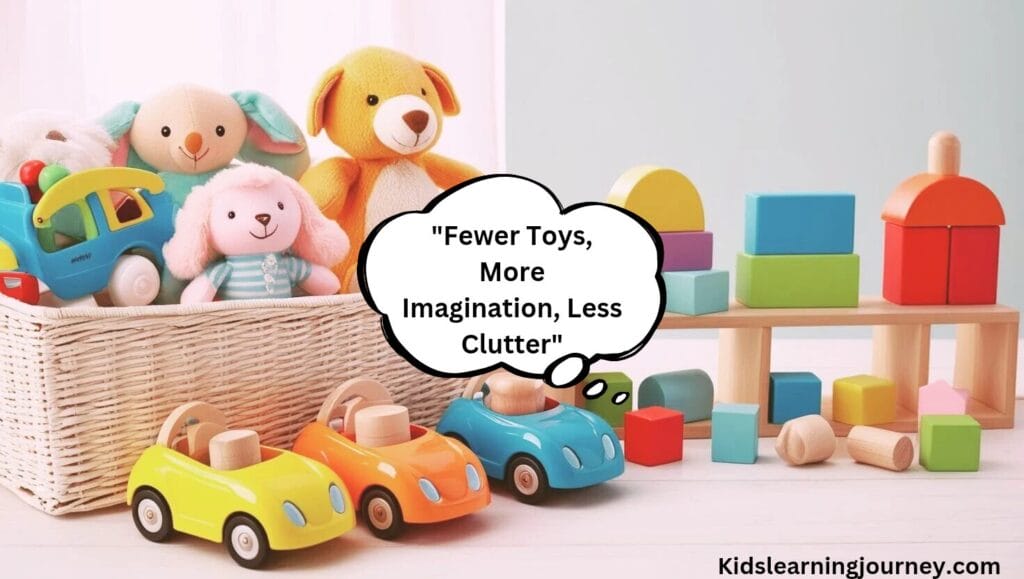
One easy activity is a sorting tray. Give a child a mix of objects and invite them to group them in any way they choose. Another is pattern building with colored cups, beads, or paper squares. You can also create shape hunts around the room or ask children to build the tallest tower they can, then compare heights.
Storybooks can support emergent math too. Books that include counting, comparing, shapes, or sequence give children a way to hear math language in a relaxed setting. This is one reason many parents who already feel comfortable with read-alouds find early math easier once they connect it to books and play.
Worksheets have a place, but they work best after children have had real experiences with the concept. A child will understand a “circle the bigger object” page more deeply after comparing real objects first. At Kids Learning Journey, that balance between playful learning and structured practice is what helps early skills stick.
Common mistakes to avoid
One common mistake is moving too quickly into abstract work. If a child is tracing numbers but does not understand quantity, the written practice may not mean much yet. It is better to build understanding with objects and conversation first.
Another mistake is focusing only on counting. Counting is important, but emergent math is wider than that. Children also need practice with patterns, shapes, sorting, comparison, and spatial language.
It is also easy to overcorrect. If a child makes a mistake, gentle prompting usually works better than immediate correction. You might ask, “Want to count that again together?” or “How did you decide?” That keeps the moment supportive instead of stressful.
Finally, try not to judge progress by performance in one setting. Some children show more math understanding during play than in direct instruction. Others need more repetition before they speak confidently about what they know. Progress can look uneven, and that is normal.
When to offer more support
If a child consistently struggles to notice differences in quantity, sort simple objects, repeat basic patterns, or understand common positional words after many playful opportunities, it may help to slow down and provide extra practice. That does not automatically signal a serious problem. Often, children simply need more hands-on repetition or a different teaching approach.
If concerns continue, especially alongside broader developmental concerns, talking with a teacher or pediatric professional can be helpful. Early support is most useful when it is calm, practical, and based on observation rather than worry.
Emergent math starts small, but those small moments add up. Every counted cracker, every sorted toy bin, every pattern clapped across the kitchen table helps a child build real mathematical understanding. If you keep it playful, consistent, and connected to daily life, math becomes less of a subject to fear and more of a language your child learns to speak with confidence.