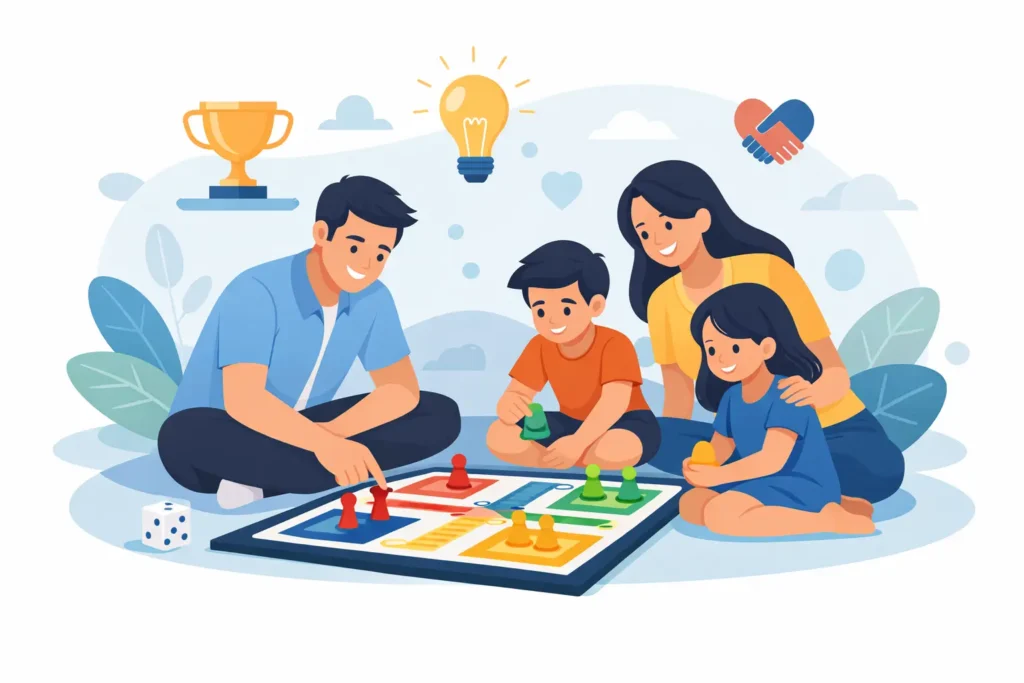
Some of the best learning moments happen when kids do not realize they are practicing important skills. That is exactly why the Benefits Of Playing Ludo With Kids go far beyond filling time on a rainy afternoon. This simple board game can support counting, patience, social skills, and emotional growth, all while giving families a screen-free activity that feels fun instead of forced.
For parents and teachers of preschoolers and early elementary children, that matters. Many children learn best when practice is built into play, especially when an activity feels predictable, interactive, and easy to repeat. Ludo checks all of those boxes.
Why Ludo works so well for young children
Ludo is easy to understand, which makes it a strong choice for younger learners. The goal is clear, the turns are short, and the repeated actions help children learn through routine. Roll the die, count the spaces, move a piece, wait for the next turn. That kind of structure gives children a calm framework for learning.
Unlike some games that require reading directions, advanced strategy, or long attention spans, Ludo is beginner-friendly. A child can join with adult support at first and often become independent after only a few rounds. That makes it useful for family game night, classroom centers, homeschool breaks, or one-on-one parent-child time.
Another reason it works is that it blends luck with decision-making. Kids still have to think about what move makes sense, but they are not overwhelmed by too many choices. For younger children, that balance helps them feel successful.
Benefits Of Playing Ludo With Kids for learning
One of the biggest educational benefits of Ludo is early math practice. Children use one-to-one correspondence as they count spaces. They also strengthen number recognition by identifying the dots on the die and connecting that number to movement on the board. For preschool and kindergarten learners, this kind of repeated counting practice can be very helpful.
Ludo also supports visual tracking. Kids follow their own pieces around the board, keep an eye on other players, and notice where each token is located. That may sound simple, but these visual attention skills matter in early learning, especially when children are developing focus for reading, writing, and classroom tasks.
The game can also encourage problem-solving. Even though Ludo is not a highly complex strategy game, children still make choices. Should they move the piece closest to home, or move another one into a safer position? Should they spread out their tokens or focus on one? These small decisions build planning skills in an age-appropriate way.
Children also practice listening and following rules. They learn that games have boundaries, and everyone follows the same system. This is useful for school readiness because children need experience with routines, fairness, and self-control in group settings.
Social and emotional benefits of playing Ludo with kids
Board games can teach social skills in a very natural way, and Ludo is especially good for this. Children practice turn-taking every single round. They have to wait, watch, and respond at the right time. For kids who tend to interrupt, grab, or rush, regular game play gives them repeated practice with patience.
Ludo also creates opportunities to learn emotional regulation. Sometimes a child rolls the number they hoped for, and sometimes they do not. Sometimes they get close to the finish and another player sends their token back. Those moments can be frustrating, especially for younger children. With adult guidance, though, they become chances to practice coping skills.
You can help by modeling calm language such as, “That was disappointing, but you can try again next turn.” Over time, children begin to understand that losing progress in a game is not the end of the world. That kind of resilience carries over into schoolwork, friendships, and everyday challenges.
Winning and losing are both part of the learning. Kids need chances to experience success, but they also need safe, manageable moments of disappointment. Ludo provides both. Because the game is light and familiar, children can learn to handle those feelings without the pressure of a high-stakes activity.
How Ludo supports family bonding
Not every learning activity needs to look academic. In fact, many families get better results when learning is woven into connection. Ludo gives parents a chance to sit down, slow down, and enjoy shared time with their children.
That connection matters. When children feel positive attention from a parent or teacher, they are often more open to learning in other areas too. A simple board game can strengthen trust, communication, and family routines. It can become one of those small traditions children remember.
Ludo is also affordable and easy to repeat. You do not need fancy materials or long prep time. That makes it practical for busy families who want meaningful screen-free options without adding more pressure to the day.
For educators, the same benefit applies in a different way. Playing Ludo in a classroom or small-group setting can help children build peer relationships. Shared games often reveal important social patterns too, such as who waits well, who struggles with frustration, and who needs help speaking up.
Skills children practice without noticing
One reason parents love game-based learning is that it often feels easier than formal instruction. A child who resists worksheets may happily count spaces around a board. A child who struggles to wait during daily routines may practice patience more willingly during a game.
During Ludo, children are quietly building several important skills at once:
- counting and number recognition
- turn-taking and patience
- focus and visual attention
- following rules and routines
- coping with disappointment
- basic decision-making
- communication and social interaction
That combination makes the game especially useful for early learners. It supports academic readiness, but it also strengthens the life skills children need in group learning environments.
Tips for making Ludo more educational
If you want to stretch the learning a little further, small adjustments can help. Ask your child to count aloud as they move each piece. If they skip numbers or rush, gently guide them back. This turns every move into math practice.
You can also work on language skills by talking through decisions. Ask questions like, “Which piece do you want to move?” or “What might happen if you choose that one?” This encourages children to explain their thinking and build vocabulary.
For children who are still learning colors, use the game pieces as color recognition practice. For children working on emotional skills, name feelings as they come up. If a child is upset, pause and help them describe what they feel before continuing.
There is no need to turn every game into a lesson. The goal is still enjoyment. But with a little intention, Ludo can become a simple way to reinforce early learning goals at home or in the classroom.
A few things to keep in mind
Like any activity, Ludo works best when it matches the child. Very young children may need shorter games, fewer rules, or adult help staying engaged. Some children love competition, while others become upset quickly when they lose progress. In those cases, it can help to keep the mood light and treat the game as practice rather than performance.
It is also okay if Ludo is not every child’s favorite game. Some children prefer movement-based activities or open-ended play. The point is not to force one game, but to notice that even traditional board games can support development in meaningful ways.
If your child is new to games, start small. Play one short round. Narrate the steps clearly. Celebrate effort, not just winning. Over time, many children become more confident and more capable of playing independently.
For families who want learning to feel more natural, this is where simple games can really help. At Kids Learning Journey, that balance between fun and skill-building is at the heart of what makes early learning work. Ludo may look like a basic board game, but in the right setting, it becomes a playful tool for growth, connection, and everyday learning that children actually enjoy.