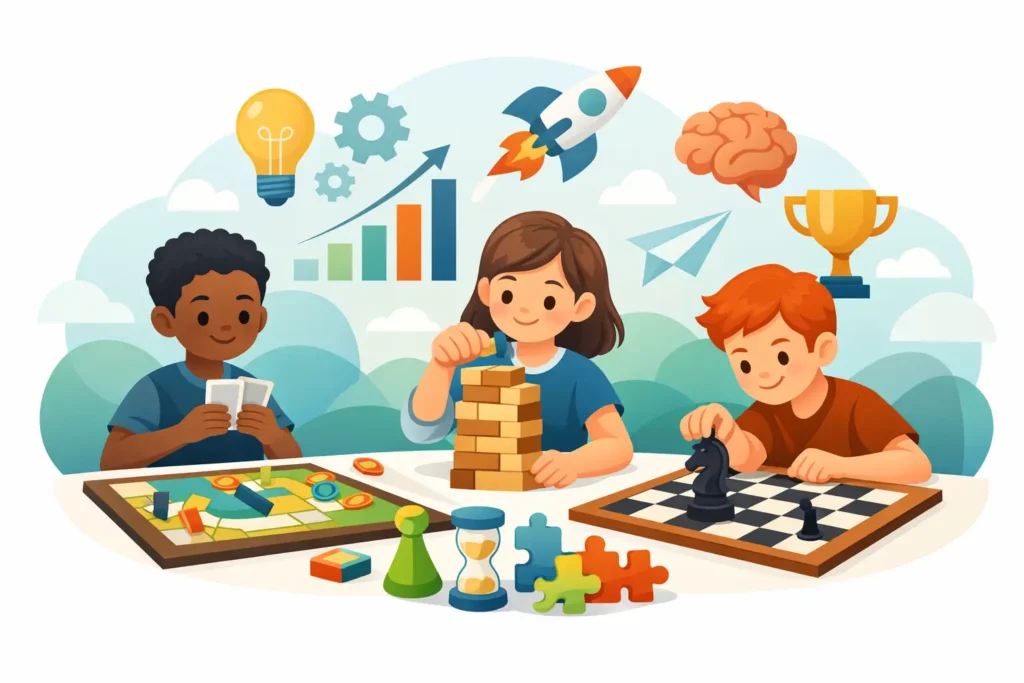
If you have ever watched a child bounce from one activity to the next, you already know how hard it can be to find play that is both fun and worthwhile. That is why Board Games For kids can be such a helpful tool. The right game does more than fill time – it can strengthen early math, build language, improve attention, and give children practice with patience, turn-taking, and problem-solving.
For parents, homeschoolers, and teachers, board games offer something especially valuable: structured play with a clear purpose. Children feel like they are just having fun, but they are also learning to follow rules, notice patterns, count carefully, listen closely, and manage emotions when things do not go their way. That mix matters, especially in the preschool and early elementary years.
Not every game is a good fit for every age, though. Some are too complicated, some move too slowly, and some depend more on luck than learning. A better approach is to choose games based on the skills you want to support and the age of the children playing.
Why board games matter for young learners
Board games give children hands-on learning in a way worksheets and screens cannot always provide. They invite kids to touch, move, talk, sort, count, and respond in real time. That kind of active engagement is especially useful for younger children who learn best through play and repetition.
They also create natural opportunities for skill building. A simple matching game can support memory and visual discrimination. A counting game can reinforce number recognition and one-to-one correspondence. A game with categories or clues can strengthen vocabulary and expressive language.
Just as important, board games teach social and emotional skills that are easy to overlook. Children learn to wait for a turn, handle disappointment, celebrate others, and keep trying. These are big lessons for little learners. If you are working on school readiness, these habits are every bit as important as knowing letters and numbers.
How to choose board games for kids
The best board games for kids are easy to explain, quick to set up, and appropriate for a child’s developmental stage. A game that is too advanced can lead to frustration fast. A game that is too simple may hold attention for only a few minutes.
Start with age range, but do not stop there. Think about your child’s attention span, frustration tolerance, and learning goals. A 5-year-old who loves numbers may enjoy a math-based game that another 5-year-old finds stressful. A child who is still learning to lose gracefully may do better with cooperative games at first.
It also helps to consider group size. Some games work beautifully for one adult and one child, while others are better in a classroom or sibling setting. If your goal is a calm after-dinner activity, choose something short and simple. If you want a center activity for several students, pick a game with clear turns and minimal waiting time.
12 board games for kids worth trying
Candy Land remains a classic for a reason. It is easy for preschoolers to understand, and it helps with color recognition, turn-taking, and following a sequence. There is very little strategy, which makes it best for beginners who are still learning how games work.
Chutes and Ladders is another early favorite. It supports counting and number order while introducing children to the emotional ups and downs of games. The trade-off is that it can feel long for some children, especially if they are frustrated by sliding backward.
Hi Ho Cherry-O is great for early math practice. Children count pieces, compare quantities, and get repeated exposure to adding and subtracting in a playful way. It works especially well for preschool and kindergarten learners.
Zingo is a strong choice for early readers and pre-readers. Depending on the version, children can practice picture matching, vocabulary, or sight words. The pace is quick, which helps keep young learners engaged.
Sequence for Kids adds more strategy without becoming overwhelming. Children match cards to spaces on the board and begin thinking ahead. This supports visual scanning, planning, and basic decision-making.
Count Your Chickens is a wonderful cooperative game for younger children. Players work together to gather chicks and bring them back to the coop. Because everyone wins or loses as a team, it can be especially helpful for children who are still building confidence with gameplay.
The Sneaky, Snacky Squirrel Game is popular in many preschool and kindergarten settings. It helps children practice color recognition, sorting, and fine motor control as they use the squirrel tool to pick up acorns. It feels playful while still supporting important readiness skills.
Guess Who? encourages children to ask questions, listen carefully, and use descriptive language. It is excellent for oral language development and logical thinking. For some children, this game also becomes a fun way to build confidence in speaking.
Uno is technically a card game, but many families use it like a go-to tabletop learning game, and it earns a spot here because of its value. Children practice color matching, number recognition, and flexible thinking. It can move quickly, so it works well for kids who lose interest in slower games.
Catan Junior is a good option for older elementary children who are ready for more strategy. It introduces planning, resource management, and simple negotiation. It is not the best first board game, but it can be a strong next step once children are comfortable with basic rules and longer play.
Outfoxed is another cooperative option that supports attention, deduction, and teamwork. Children gather clues to solve a mystery together. It gives kids a chance to think carefully without the pressure of direct competition.
Boggle Junior supports letter recognition, beginning spelling, and visual tracking. It is especially useful for children who are starting to connect sounds and letters. If your child is working on early literacy at home, this can fit nicely alongside phonics and word-building activities.
What skills board games can build
Many families think of board games as a rainy-day activity, but they can be a steady part of learning when chosen intentionally. Literacy games can strengthen vocabulary, listening, and word recognition. Math-focused games can support counting, number sense, comparing amounts, and simple operations.
There are also less obvious benefits. Strategy games help children think ahead and make choices. Memory games strengthen concentration and recall. Cooperative games build communication and emotional regulation. Even rolling dice and moving pieces can improve fine motor control and one-to-one counting.
This is where purposeful play really shines. A child who resists formal practice may happily work on the same skill through a game. That does not mean every game needs to feel academic. In fact, children often learn more when the experience feels light, playful, and low-pressure.
Best picks by age
For preschoolers, the best games are short, visual, and simple. Think Candy Land, Hi Ho Cherry-O, Count Your Chickens, and The Sneaky, Snacky Squirrel Game. At this age, children are still learning how to take turns, follow rules, and stay with an activity until the end.
For kindergarten and early first grade, games like Zingo, Guess Who?, Sequence for Kids, and Boggle Junior become more appropriate. These children can usually manage slightly more complex rules and are often ready for games tied to letters, words, and basic strategy.
For older elementary learners, consider Uno, Outfoxed, and Catan Junior. These games require more flexible thinking and a longer attention span. They also tend to be more satisfying for children who want a challenge rather than a purely chance-based game.
How to make game time more educational without ruining the fun
A small shift in how you play can turn a game into a meaningful learning moment. You might ask your child to name colors, count spaces out loud, explain a choice, or retell the rules. These tiny prompts add practice naturally, without making the game feel like a test.
You can also rotate games based on current goals. If your child is learning number bonds, pull out counting games more often. If you are focusing on social skills, cooperative games may be the better choice for a season. In a classroom, games can be paired with themed lessons or used in small groups for targeted reinforcement.
At Kids Learning Journey, this kind of playful structure fits beautifully with early learning at home. A board game can support the same foundational skills children practice through phonics work, handwriting, or early math activities, but in a format that feels fresh and motivating.
A few mistakes to avoid
One common mistake is choosing games that are too hard too soon. Adults sometimes assume a bright child will enjoy a complicated game, but too many rules can drain the fun. It is often better to start simple and build up.
Another issue is expecting children to play by every rule right away. Younger kids may need shorter rounds, extra reminders, or simplified directions. That is completely normal. The goal is growth, not perfection.
It also helps to avoid turning every game into a lesson. A little guidance goes a long way. If children feel corrected every minute, they may stop enjoying the experience. Keep it warm, playful, and encouraging.
The best board games are not always the newest or most expensive ones. They are the games your child will actually want to play again. When a game sparks conversation, laughter, and meaningful practice, it becomes much more than entertainment. It becomes one more simple, reliable way to help children learn through play.