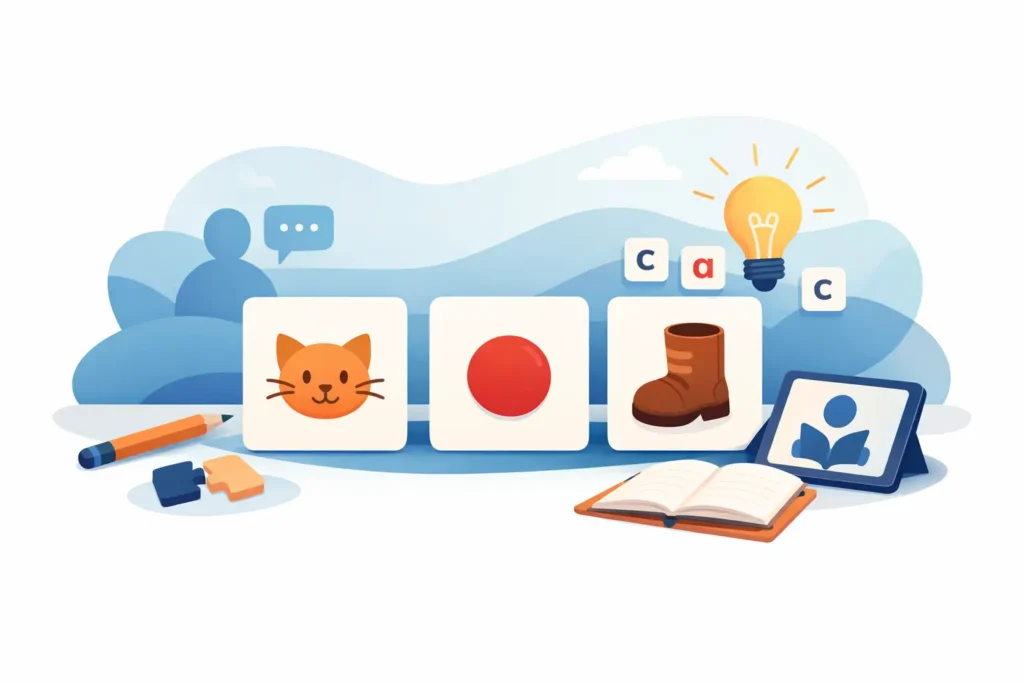
If your child can recognize letters but still struggles to read simple words like cat, dog, or pen, CVC words are often the missing piece. So, what are CVC words? They are short three-letter words that follow a consonant-vowel-consonant pattern, and they give young readers one of their first real chances to blend sounds into words they can read on their own.
That small win matters more than many parents realize. CVC words help children move from knowing isolated letter sounds to using phonics in a practical, meaningful way. For preschoolers, kindergartners, and early readers, they are often the bridge between learning the alphabet and actually reading.
What are CVC words?
A CVC word is made up of three sounds in a simple pattern: consonant, vowel, consonant. Words like cat, bed, pig, hot, and sun are classic examples. Each letter usually represents one clear sound, which makes these words easier for beginners to sound out.
This is why teachers and reading specialists introduce them early. Unlike trickier words with silent letters or vowel teams, CVC words are usually predictable. A child who knows the sounds for c, a, and t can blend them together and read cat. That predictability builds confidence fast.
It also helps children hear how spoken words are made of smaller parts. When a child says /c/ /a/ /t/ and then blends those sounds into cat, they are developing phonemic awareness and decoding skills at the same time.
Why CVC words matter in early reading
Early reading instruction works best when children can practice with words that make sense and follow clear rules. CVC words do exactly that. They are simple enough to decode, but meaningful enough to feel like real reading.
For many children, this is the stage when reading starts to click. They stop guessing based on pictures or memorizing a few familiar words and begin using sound-letter knowledge to read new words. That shift is a big step toward independent reading.
CVC words also support spelling. When children hear the sounds in a word like dog and write d-o-g, they are learning that reading and writing are closely connected. Even if the spelling is shaky at first, the practice strengthens sound awareness.
There is a practical side to this too. If you are teaching at home or supporting classroom learning after school, CVC words are easy to build into short, low-stress activities. You do not need an elaborate lesson to make progress. A few minutes of focused practice can go a long way.
Examples of CVC words by vowel sound
Grouping CVC words by middle vowel can make practice easier for young learners. It helps children notice patterns and gives them repeated exposure to one short vowel sound at a time.
Short a words include cat, bat, hat, map, bag, and jam. Short e words include bed, hen, pen, red, net, and leg. Short i words include pig, sit, lip, fin, pin, and big. Short o words include dog, hop, pot, log, mop, and fox. Short u words include sun, bug, cup, run, rug, and mud.
This kind of grouping is helpful because short vowels are often the trickiest part for new readers. Many children can identify beginning and ending sounds before they consistently hear the middle vowel. Practicing families of similar words gives them a better chance to notice those differences.
How children learn to read CVC words
Most children do not master CVC words all at once. They usually move through a few small stages.
First, they learn individual letter sounds. Then they begin hearing the first sound in a word, then the last sound, and eventually the middle sound. After that, they start blending sounds together. At first, this may sound slow and choppy: /d/ … /o/ … /g/. With practice, it becomes smoother until dog sounds like a whole word instead of three separate parts.
Some children pick this up quickly, while others need repeated, hands-on review. That is normal. Reading development is not perfectly even, especially in the early stages.
It also depends on what else is happening. A child may know letter sounds well but still struggle to blend. Another child may blend easily but confuse short e and short i. These are common bumps, not signs that something is wrong.
What makes CVC words a good starting point?
CVC words work well because they reduce the number of things a child has to figure out at once. The pattern is short, the sounds are usually regular, and the words are familiar enough to understand.
That matters for attention and motivation. A long or irregular word can feel overwhelming to a beginning reader. A word like hat feels manageable. When children can decode a word successfully, they are more willing to try the next one.
CVC words are also easy to manipulate during phonics practice. You can change one letter and create a new word: cat, hat, hot, dot, dog. This helps children see that changing one sound changes the whole word. That is a powerful lesson in how print works.
Simple ways to teach CVC words at home or in class
The best CVC practice is usually short, clear, and playful. Young children learn more from a focused ten-minute activity than from a long lesson that feels frustrating.
Start with oral sound play before putting everything on paper. Say a word like sun slowly and ask your child what sound they hear at the beginning, middle, or end. This builds listening skills that support reading later.
Once children know a few letter sounds, use word building activities. Magnetic letters, letter tiles, or even handwritten cards can work well. Build a word like pin, read it together, then switch one letter to make pan or pig. This helps children connect sounds, letters, and patterns in a concrete way.
Decodable practice is especially useful here. Instead of giving children random word lists, let them read words and simple sentences that mostly use patterns they already know. If a child has learned short a and short i CVC words, a sentence like The cat is big feels challenging but possible.
Writing practice helps too. Ask children to listen to a simple word and write the sounds they hear. Spelling does not need to be perfect right away. The goal is to help them stretch the word and hear each sound in order.
Common challenges with CVC words
Even with a strong start, some children hit a few predictable stumbling blocks.
One of the biggest is short vowel confusion. Words like pen and pin or bag and beg can sound similar to young learners. When that happens, slow down and exaggerate the middle vowel sound. It may also help to practice just one vowel family at a time rather than mixing too many together.
Another challenge is guessing instead of decoding. If a child sees a picture of a dog and says puppy, they may be relying on context rather than the letters. Pictures can be helpful, but they should not replace sound-by-sound reading practice.
Some children also skip the middle sound entirely. They might read dog as dig or say only the first and last sounds. This usually means they need more phonemic awareness practice, especially with hearing and identifying medial vowels.
If your child seems tired or resistant, that matters too. Early reading can be mentally demanding. A shorter lesson, a game-based activity, or a change of pace often works better than pushing through frustration.
When should children start learning CVC words?
Many children are ready to begin CVC word work in preschool or kindergarten, once they know several consonant sounds and at least one or two short vowels. But readiness is more important than age.
A child does not need to know every letter sound before starting. In fact, many early phonics programs introduce a small set of letters first so children can begin blending quickly. The goal is progress, not perfection.
If you are wondering whether your child is ready, look for a few signs. Can they identify some letter sounds? Can they hear the first sound in simple words? Are they interested in letters, books, or word games? If so, they may be ready to try basic CVC practice.
For families and teachers who want a gentle starting point, structured practice can make a big difference. At Kids Learning Journey, this often looks like simple phonics activities, beginner-friendly worksheets, and repeatable routines that make reading feel doable.
What are CVC words really teaching?
On the surface, CVC words teach children how to read short three-letter words. But underneath that, they are teaching something much bigger. They show children that print is not random, that letters represent sounds, and that words can be figured out step by step.
That realization can change a child’s relationship with reading. Instead of waiting for an adult to supply every word, they begin to see themselves as capable readers. That confidence grows one small success at a time.
If your child is just starting out, keep it simple. A handful of letter sounds, a few easy CVC words, and regular playful practice are often enough to spark real progress. Sometimes the smallest words open the door to everything that comes next.