Some preschool days feel magical. Your child is happily tracing letters, counting toy cars, and asking thoughtful questions about bugs in the backyard. Other days, they are under the table before breakfast and refusing to hold a crayon. A good preschool homeschool curriculum guide helps with both kinds of days. It gives you enough structure to support real learning without turning your home into a tiny school.
For most families, the best preschool plan is not the most expensive or the most packed with worksheets. It is the one that matches how young children actually learn – through repetition, movement, conversation, play, and short bursts of focused time. If you are trying to choose or build a preschool homeschool routine, the goal is simple: cover the right skills in a way your child can enjoy and you can keep up with.
What a preschool homeschool curriculum should include
Preschool does not need to look academically intense to be effective. At this age, children are building foundational skills that prepare them for kindergarten and beyond. That means your curriculum should focus on growth across several areas, not just alphabet practice.
Early literacy is one of the biggest pieces. This includes letter recognition, listening to stories, rhyming, learning beginning sounds, and building vocabulary through conversation and read-alouds. Writing readiness matters too, but it usually starts with pre-writing lines, hand strength, and learning how to control crayons, markers, and pencils.
Early math should be part of the picture as well. Preschoolers benefit from counting, sorting, noticing patterns, comparing sizes, and recognizing simple shapes. They do not need long math lessons. They need frequent, hands-on experiences that help numbers and patterns feel familiar.
A strong preschool homeschool curriculum guide should also include fine motor and gross motor development. Cutting with child-safe scissors, threading beads, playing with playdough, hopping, climbing, and dancing all support later academic skills. Social-emotional learning matters just as much. Preschoolers are learning how to wait, express feelings, follow routines, and recover from frustration.
Then there is the part many parents underestimate: general knowledge. Nature walks, seasonal topics, community helpers, weather, animals, colors, and simple science observations all build background knowledge. That background supports reading comprehension and curiosity later on.
How to choose a preschool homeschool curriculum guide that fits your family
The right curriculum depends on your child and your daily life. A very structured program can be comforting for some parents, especially if they want a clear plan and printable lessons. But a heavily academic program can also be too much for a young child who still needs lots of movement and open-ended play.
If your child loves predictable routines, a curriculum with daily themes and short activities may work well. If your child resists table work, you may want a lighter framework that lets you teach through songs, books, sensory bins, and hands-on activities. Neither approach is automatically better. It depends on attention span, temperament, and how much teaching prep you realistically have time for.
Think about your own teaching style too. Some parents enjoy planning themed units and gathering supplies. Others need grab-and-go resources that require very little setup. Be honest here. A beautiful curriculum is not helpful if it sits untouched because it asks too much of your week.
Affordability matters as well. Preschool does not require a huge budget. In fact, many families do better with a simple mix of library books, basic supplies, printable practice pages, and everyday learning through routines. You do not need to buy every subject in a boxed set to give your child a strong start.
A simple preschool homeschool schedule that works
One of the most common mistakes in preschool homeschooling is trying to recreate a full school day. Young children learn best in short sessions. A focused preschool day may only include 30 to 90 minutes of intentional learning, spread out across the morning.
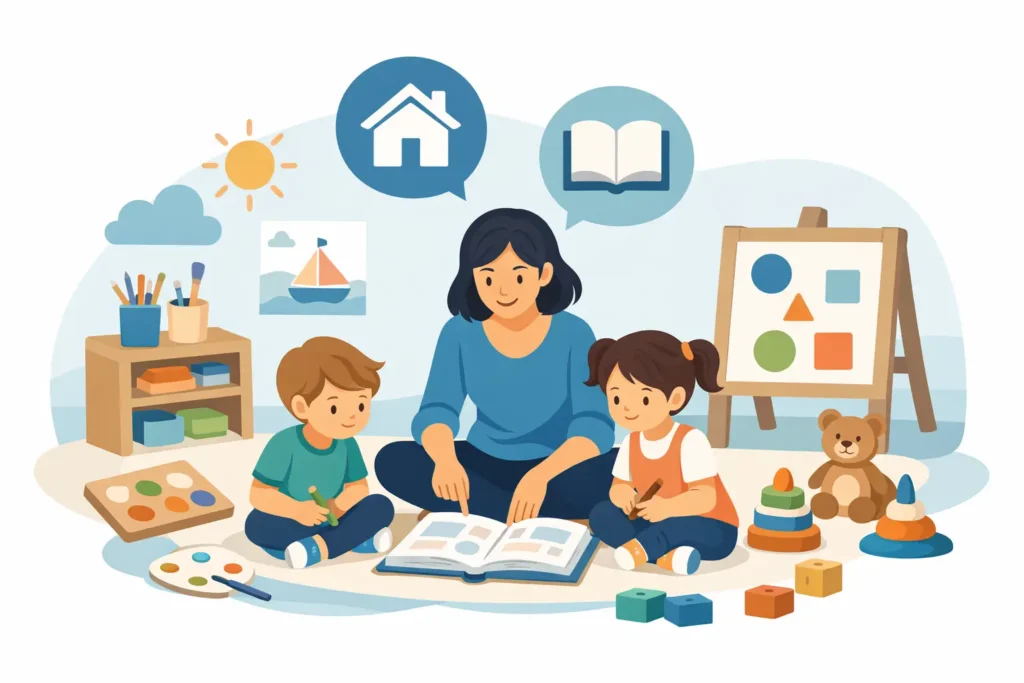
A gentle routine often works better than a strict timetable. You might start with a morning song, calendar, or weather check. Then move into a read-aloud, one literacy activity, one math activity, and something hands-on like art, sensory play, or a fine motor task. Outdoor time is not extra. It is part of the curriculum.
You also do not need to cover every subject every day. Reading aloud can happen daily, but math, crafts, science, handwriting readiness, and themed learning can rotate through the week. This keeps things fresh and lowers the pressure on both you and your child.
The best routine is the one you can repeat consistently. Preschoolers thrive on knowing what comes next, even if the plan is simple.
Preschool homeschool curriculum guide by subject
Literacy and language
Build literacy around books, songs, and playful exposure to letters and sounds. Read aloud every day, even if it is only for ten minutes. Choose books with strong rhythm, repetition, and pictures that invite conversation. Ask simple questions, point out details, and let your child retell parts of the story.
For skill practice, focus on letter names, uppercase and lowercase matching, rhyming, beginning sounds, and oral language. Keep worksheet use light and purposeful. A few tracing or letter-recognition pages can be useful, but preschool literacy should be more interactive than paper-based.
Math
Preschool math works best when children can touch and move objects. Count snacks, sort buttons by color, build patterns with blocks, and compare which container holds more. Use number songs and games instead of long drills.
When you do use printables, choose activities that match real readiness. Some children love number tracing early. Others need more time with counting objects first. The skill is not just writing the number 5. It is understanding what five means.
Fine motor and handwriting readiness
Before formal handwriting, children need hand strength and control. Offer coloring, dot markers, stickers, tearing paper, playdough, tweezers, and simple tracing lines. These activities may look small, but they build the muscles needed for writing later.
If your child enjoys writing letters, keep it short and cheerful. Correct grip and posture matter, but perfection does not. At this stage, comfort and confidence are more important than neatness.
Science, discovery, and themed learning
Preschool science should feel like noticing the world. Plant seeds, observe the weather, talk about animal habitats, or explore magnets and water play. Themes can help tie learning together, especially if your child likes familiar topics like dinosaurs, farms, ocean animals, or seasons.
Just be careful not to overcomplicate it. A theme is helpful when it adds excitement and repetition. It is less helpful when it creates hours of prep and pressure.
Social-emotional learning and life skills
This area deserves a real place in your curriculum. Practice taking turns, naming emotions, cleaning up, asking for help, and following simple steps. These are not side lessons. They are preschool essentials.
Daily routines teach a lot here. Helping set the table, putting toys away, washing hands, and talking through frustrations all build independence and self-regulation.
Signs your curriculum is working
Progress in preschool can be easy to miss because it often shows up gradually. Your child may suddenly recognize letters on cereal boxes, count more accurately while playing, or sit with a book longer than before. Those changes matter.
A good curriculum does not mean your child is cheerful every minute. Preschoolers still have off days. What you want to see over time is growing familiarity, confidence, curiosity, and readiness for the next step.
If every lesson turns into a battle, that is worth adjusting. Sometimes the issue is the curriculum itself. Sometimes it is the timing, the length of the lesson, or the expectation. Preschool homeschooling works best when you stay flexible.
Common mistakes to avoid
One common mistake is pushing academics too early. It can be tempting to chase kindergarten-level outcomes in preschool, especially when you see what other children are doing. But early pressure can backfire if it replaces play, movement, and relationship-based learning.
Another mistake is confusing busy work with meaningful practice. A stack of worksheets may look productive, but young children usually learn more from a few thoughtful activities repeated often.
It also helps to avoid comparison. Some preschoolers are ready for early reading skills. Others need more time with oral language, motor development, and attention. Readiness is not a race.
If you want a practical starting point, keep your materials simple and consistent. Many families do well with a small set of read-aloud books, hands-on math manipulatives, art supplies, sensory tools, and beginner-friendly printables from trusted early learning sources like Kids Learning Journey.
A preschool year at home does not have to be flashy to be successful. If your child is listening to stories, playing with purpose, building early skills, and feeling safe enough to learn with you, that is real progress. Start small, stay flexible, and let your routine grow along with your child.