If your child knows the alphabet song but freezes when trying to read a simple word like cat, you are not doing anything wrong. This is often the moment parents start asking how to teach phonics at home in a way that feels clear, manageable, and actually effective.
The good news is that phonics does not need to look like a full classroom lesson. At home, it works best when it is short, consistent, and playful. Young children learn more easily when they can hear sounds, say them out loud, move letters around, and practice with words that feel just right for their age.
What phonics really means
Phonics is the connection between letters and sounds. When children learn that the letter m says /m/ and the letters sh make a new sound together, they begin to understand how written words work. That understanding is what helps them decode unfamiliar words instead of guessing.
This matters because memorizing sight words alone is not enough for long-term reading growth. A child who can sound out words has a tool they can use again and again. That said, phonics is only one part of learning to read. Children also need vocabulary, read-aloud time, conversation, and practice with books. At home, the goal is not to recreate every part of school. It is to build a strong foundation.
How to teach phonics at home without making it stressful
Start small. Most preschoolers and early elementary children do better with 10 to 15 minutes of focused phonics practice than with long lessons. If your child is tired, frustrated, or wiggly, shorter is better.
A simple routine often works best. Begin with one or two letter sounds your child already knows so they feel successful. Then introduce one new sound or pattern. Practice reading a few words with that sound, and end with something light such as a game, a quick worksheet, or a short decodable reader.
The biggest mistake many adults make is teaching letter names first and assuming sounds will follow automatically. Letter names are useful, but reading starts with sounds. When you point to b, focus on /b/. When you point to a, use the short sound in words like apple at the beginning. Once children hear and recognize sounds clearly, blending words becomes much easier.
Start with the right phonics sequence
You do not need to teach every letter in alphabetical order. In fact, that can slow some children down. It usually helps to begin with common consonant sounds and short vowels, then build simple three-letter words.
A practical order might look like this: teach a few easy consonants such as m, s, t, p, and n, then add short vowels like a and i. After that, begin blending words like mat, sat, pin, and sit. Once your child can read and build simple CVC words, you can move to digraphs like sh, ch, and th, then longer vowel patterns over time.
It depends on your child’s age and readiness. A preschooler may spend longer identifying beginning sounds and matching letters. A kindergartener or first grader may be ready to blend and segment words much sooner.
Focus on these core phonics skills
Parents often feel unsure because phonics can seem bigger than it is. At home, there are four main skills to focus on.
First, help your child hear sounds in words. Ask simple questions like, “What sound do you hear at the beginning of sun?” or “What sound do you hear at the end of map?” This kind of listening practice supports phonics before reading even begins.
Second, teach letter-sound correspondence. Your child should be able to see a letter and say its sound, and hear a sound and identify the letter.
Third, practice blending. This means pulling separate sounds together to read a word. You might say /c/ /a/ /t/ slowly and then ask your child to say the whole word.
Fourth, practice segmenting. This is the reverse skill. Say the word dog and ask your child to tell you the sounds they hear: /d/ /o/ /g/. Segmenting helps with both reading and spelling.
Easy ways to make phonics stick
Children usually learn phonics faster when they can touch, move, and play. A worksheet can be helpful, but it should not be the only tool.
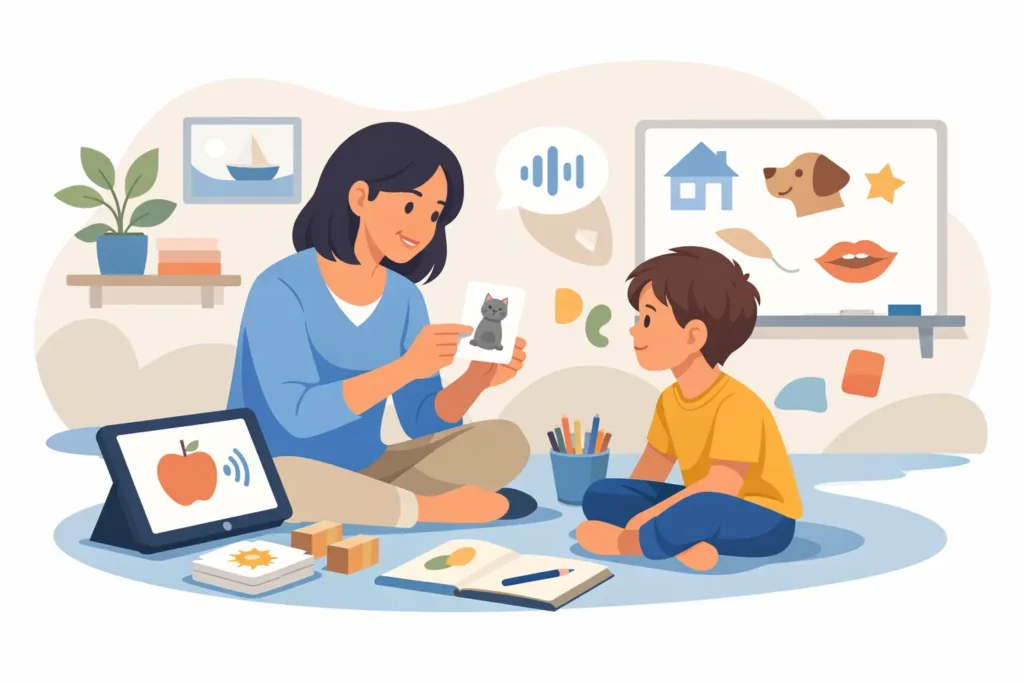
Try using magnetic letters on the fridge or a cookie sheet. Build a simple word like sat, then swap the first letter to make mat, pat, and fat. This shows children that changing one sound changes the whole word.
You can also use sound hunts around the house. Ask your child to find something that starts with /b/ or something that ends with /t/. If they are just beginning, keep it oral and playful. If they are ready, have them write or match the letter too.
Another strong option is using picture cards. Show a picture of a sun, say the word slowly, and ask for the beginning sound. This works well for preschoolers who are not yet reading full words.
Printable activities can also help create structure. If your child enjoys pencil-and-paper learning, phonics worksheets, alphabet tracing pages, and simple word-building mats can reinforce what you taught out loud. On Kids Learning Journey, families often look for these kinds of resources because they turn a lesson into something concrete and easy to repeat.
Reading practice matters more than parents expect
Once your child knows a few sounds, begin reading simple decodable words and books. This is where phonics starts to feel useful instead of abstract. A decodable text gives children a chance to apply the sound patterns they have learned, rather than guessing from pictures alone.
If your child reads very slowly, that is okay. Early phonics reading often sounds choppy at first. Let them work through the sounds. If a word is too difficult after a real attempt, help them and move on. Confidence matters, and too much struggle can make a child avoid reading.
There is a trade-off here. Repetition is helpful, but boredom is real. If your child is tired of reading the same type of CVC words, add games, change materials, or read one simple book together and one richer picture book aloud just for enjoyment.
What to do if your child mixes up letters or sounds
This is very common, especially with letters like b and d or short vowel sounds. It does not always mean there is a larger problem. Many young children need repeated exposure before those details stick.
Keep practice clear and specific. If your child confuses b and d, teach them separately for a while instead of introducing many similar letters at once. Use visual cues, skywriting, tracing, and lots of verbal repetition. If short vowels are tricky, spend extra time hearing them in spoken words before expecting accurate reading.
If your child becomes frustrated, pull back and simplify. Success builds momentum. One correctly read word today can do more for confidence than ten tearful minutes of pushing through.
A sample weekly phonics routine
You do not need an elaborate plan. A steady rhythm is often enough.
On one day, introduce a letter sound or phonics pattern. On the next day, review it with oral sound games and letter matching. Another day can focus on building and reading words. Then add a short decodable reading session, followed by a light review day with a worksheet, tracing page, or simple hands-on activity.
This kind of routine gives children repetition without feeling too rigid. It also helps busy parents stay consistent. Even four short sessions each week can make a real difference over time.
Signs your child is ready for the next step
Move forward when your child can recognize the sounds you have taught with reasonable confidence, blend simple words without too much guessing, and stay engaged during short practice sessions. If those skills are still shaky, review before adding new patterns.
It is tempting to rush into long vowels, blends, and trickier spelling patterns. But strong early phonics depends on automatic recognition of the basics. Going slower at the beginning often leads to smoother reading later.
Keep the goal bigger than the lesson
Phonics is a tool, not the finish line. You are helping your child become a reader who can approach words with confidence, curiosity, and persistence. Some days that will look like a perfect little lesson. Other days it will look like sounding out two words at the kitchen table before snack.
That still counts. When learning stays warm, steady, and encouraging, children are much more likely to keep trying. And that gentle consistency is often the real secret to teaching phonics well at home.