A child who is eager to write their name will often grab a crayon long before they can form letters clearly. That is exactly where alphabet tracing worksheets printable resources can help. They give young learners a simple, repeatable way to build letter recognition, pencil control, and early handwriting skills without making practice feel overwhelming.
For parents and teachers, the appeal is easy to understand. You want an activity that is low-prep, affordable, and useful. You also want something that supports real progress, not just busy work. Good tracing pages can do that well, but the quality of the worksheet and the way you use it both matter.
Why alphabet tracing worksheets printable resources work
Tracing gives children a visual path to follow. For preschoolers and kindergarten learners, that path reduces guesswork and helps them focus on how a letter is shaped. Instead of trying to remember every curve and line from memory, they can practice the movement first.
This matters because early writing is about more than knowing the alphabet song. Children need to connect letter names, letter shapes, and the hand movements used to write them. Tracing supports all three at once. A child sees the letter, says it aloud, and practices forming it with their hand.
There is also a confidence piece that parents often notice right away. Free writing can feel frustrating when a child wants neat results but does not yet have the motor control to get there. Tracing creates a manageable starting point. That sense of success often keeps children willing to practice longer.
Still, tracing is not the whole picture. It works best as a bridge to independent writing, not a permanent substitute for it. Once children become comfortable tracing, they should also have chances to copy letters and then write them on their own.
What to look for in alphabet tracing worksheets printable sets
Not all worksheets are equally helpful. Some are thoughtfully designed for early learners, while others pack in too much and make handwriting practice harder than it needs to be.
Start with clear, uncluttered pages. Young children do better when there is plenty of white space and one obvious task. A page crowded with multiple fonts, tiny images, and extra directions may look fun, but it can distract from the actual skill being practiced.
Letter formation guides are also important. Arrows, numbered strokes, or simple directional cues can help children learn how letters are built. This is especially helpful for letters that are commonly reversed or started incorrectly, such as b, d, p, and q.
You will also want to think about line size. Preschoolers usually benefit from larger tracing lines and bigger letters because their fine motor control is still developing. Older kindergarten students may be ready for smaller lines that look more like standard handwriting paper.
A strong worksheet set often includes both uppercase and lowercase letters. That said, it depends on the child. If your learner is just starting out, focusing on uppercase first can feel easier because many uppercase letters use simpler lines. Lowercase letters become especially important once children begin reading and writing words more often.
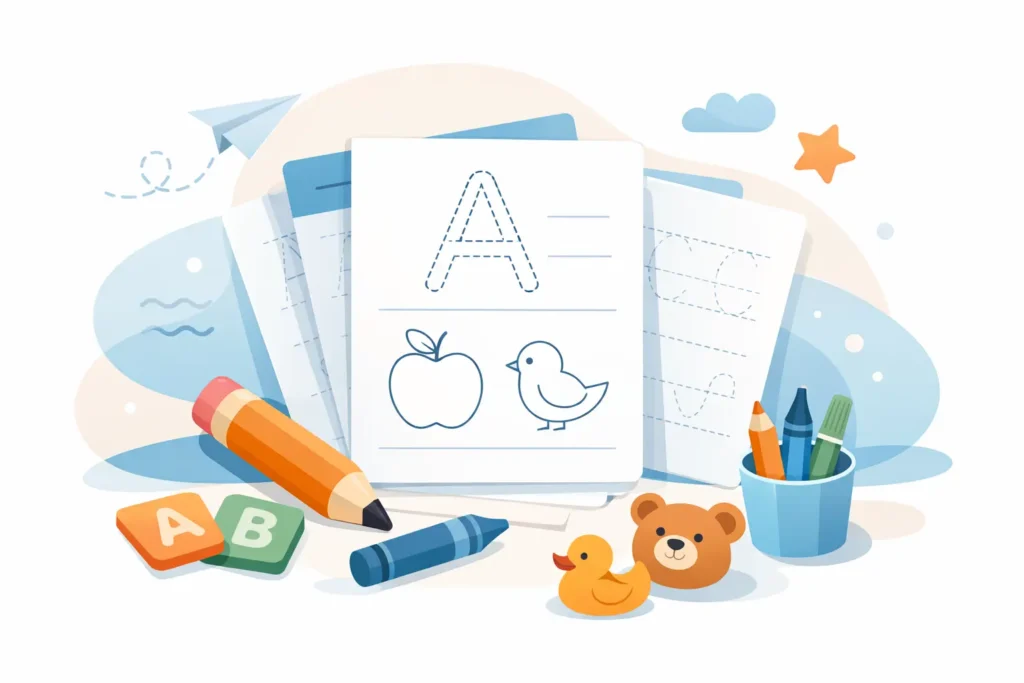
Pictures can be helpful when they reinforce letter sounds. For example, A with an apple or B with a ball gives children one more way to connect handwriting and early phonics. The trade-off is that too many decorative elements can pull attention away from the tracing itself.
How to use tracing worksheets without turning them into busy work
A worksheet is only as effective as the learning around it. If a child rushes through a page with little attention to letter shape, there may be movement happening, but not much skill-building.
The best approach is to slow things down. Before your child traces, point to the letter and name it together. Say the sound if it fits naturally with your lesson. Then model how to trace it using your finger first. This helps children understand the motion before they pick up a pencil.
Short practice sessions usually work better than long ones. Five to ten focused minutes can be far more productive than asking a young child to complete a full stack of pages. If your learner starts to lose interest, that is usually a sign to stop and come back later.
It also helps to mix tracing with hands-on activities. Children learn best when one skill appears in different forms. If you practice the letter M on a worksheet, try building it with play dough, tracing it in sand, or finding it in a favorite book. That variety keeps learning engaging and helps the letter stick.
Praise effort more than perfection. A child who is learning to control a pencil is doing a lot at once – gripping, pressing, following a line, and remembering the letter. Neat handwriting will come with time. Encouragement keeps the process positive.
When tracing is helpful and when a child may need something different
Tracing is a great fit for many young learners, but it is not a one-size-fits-all solution. Some children love the structure right away. Others resist paper tasks, even when they are developmentally ready.
If a child seems frustrated by tracing, the issue may not be letter knowledge. It could be fine motor strength, hand fatigue, or simply a need for more playful practice first. In that case, pre-writing activities like drawing lines, circles, and simple shapes may be a better starting point.
Some children also benefit from multisensory practice before using a worksheet. Writing letters in shaving cream, on a chalkboard, or with finger paint can feel less pressured. Once the movement becomes familiar, printed tracing pages often go more smoothly.
For children who already know many letters, tracing every page from A to Z may feel repetitive. They may do better with targeted practice on the letters they confuse most or the ones in their name. This is one of those areas where it depends on the learner. More pages do not always mean more progress.
Making alphabet practice part of your routine
One reason printable worksheets are so useful is that they fit easily into real family life and classroom schedules. You do not need a complicated setup to make them meaningful.
At home, tracing pages can become part of a simple morning basket, quiet time activity, or after-breakfast routine. In a classroom, they work well as literacy center tasks, small-group reinforcement, or extra support for students who need more handwriting practice.
Try pairing worksheets with a weekly letter focus. If the week centers on the letter S, you might read a few books that emphasize S words, practice the sound, do a small craft, and use one tracing page each day. That kind of repetition feels purposeful instead of random.
Laminating pages or placing them in dry-erase sleeves can also stretch your resources. Children get the repetition they need without printing the same page again and again. For many families and teachers, that makes printable materials even more practical.
If you are building a home learning routine, it helps to keep materials within reach. A small bin with pencils, crayons, dry-erase markers, and a few selected worksheets can turn practice into an easy yes instead of another task to organize from scratch.
Choosing printables that grow with your child
The best alphabet tracing worksheets printable options leave room for progress. Early pages might focus on tracing one large letter at a time. Later pages can include a letter, a matching picture, and a simple word to trace. After that, children may be ready to copy the letter independently on blank lines.
That gradual shift matters because handwriting develops in stages. Children first learn the motion, then gain control, and finally build fluency. Worksheets should support that path rather than keeping children stuck at the same level.
This is where thoughtfully designed resources from early learning brands can make a difference. If you are choosing materials from a site like Kids Learning Journey, it helps to look for printables that feel structured, clear, and age-appropriate, with enough variety to keep practice fresh while still reinforcing the same core skills.
Alphabet tracing should feel like a stepping stone, not a test. When children have simple tools, gentle guidance, and a little room to grow, those first wobbly lines begin to turn into real confidence on the page.