Few childhood games teach spelling, letter recognition, and problem-solving as quickly as Hangman. If you have ever wondered, “Childhood Games|How to play hangman?” the good news is that this classic word game is simple to set up, easy to adapt for young learners, and surprisingly useful for building early literacy skills.
How to play hangman
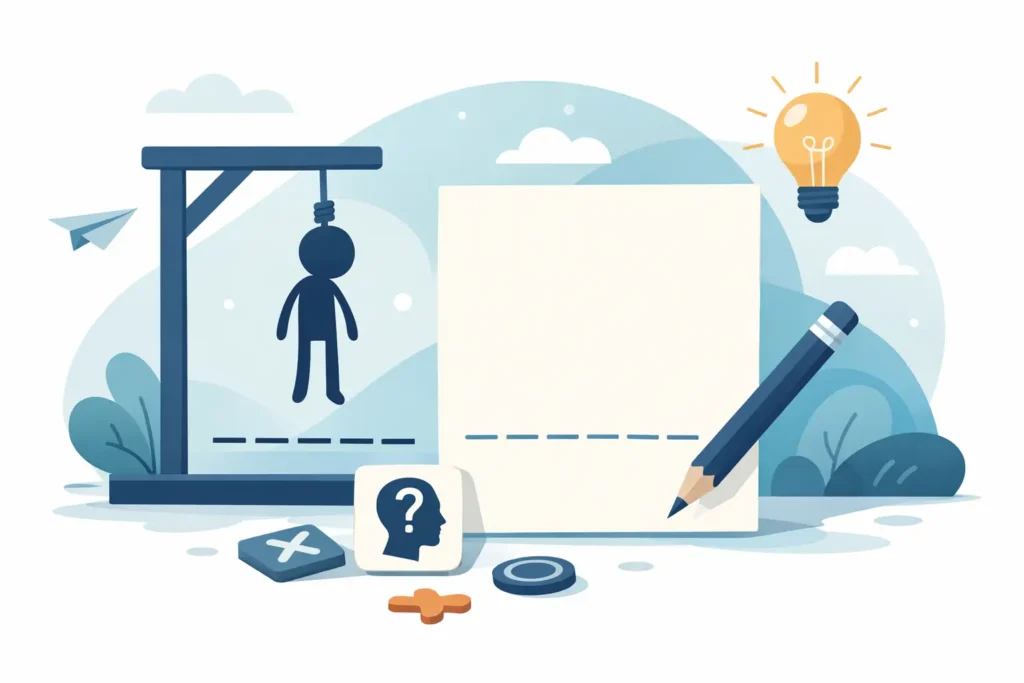
Hangman is a guessing game for two or more players. One person thinks of a word and draws a blank space for each letter. The other player guesses one letter at a time, trying to figure out the word before too many wrong guesses are made.
Traditionally, each wrong answer adds one part to a stick figure drawing. Many parents and teachers now prefer a friendlier version for young children, such as drawing a flower, snowman, rocket, or puzzle piece instead. The goal stays the same: guess the word before the picture is completed.
To start, choose a word that fits your child’s age and reading level. A preschooler may do well with simple three-letter words like cat, sun, or pig. Early elementary students can try longer words such as apple, rabbit, or pencil.
What you need to play
You only need paper and a pencil, whiteboard and marker, or even a chalkboard. One player writes a row of blanks, with each blank standing for one letter in the mystery word. If the word is “dog,” there will be three blanks.
The guessing player says one letter. If that letter is in the word, write it in every correct space. If the letter is not in the word, mark one wrong guess by drawing part of the chosen picture.
Play continues until the word is guessed or the drawing is finished.
Simple rules for kids
For younger children, clear rules make the game less frustrating and more fun. Start by explaining that they should guess one letter at a time, listen carefully, and look at which letters have already been used.
It also helps to decide your wrong-guess limit before starting. Six wrong guesses is common, but you can make it shorter or longer depending on your child’s age. A shorter game keeps attention better for little learners, while older kids may enjoy a bigger challenge.
If a child is just beginning to read, you can offer a clue such as “animal,” “color,” or “something in the classroom.” That small bit of support often turns the game into a confidence-building activity instead of a guessing struggle.
A quick example of hangman
Imagine the mystery word is “fish.” The first player draws four blanks. The second player guesses the letter “f,” and it is written in the first blank. Then they guess “a,” but that letter is not in the word, so one wrong mark is added.
Next they guess “i” and “s,” both of which are correct. If they then guess “h,” they solve the word before reaching the wrong-guess limit. That quick back-and-forth is what makes Hangman so useful for practicing letter sounds and word structure.
Why Hangman works for learning
This game is more than a time-filler. It encourages children to notice letter patterns, think about beginning and ending sounds, and test spelling ideas in a playful way. Kids are often more willing to practice literacy skills when the activity feels like a game instead of a worksheet.
Hangman can support phonics, vocabulary, and memory. It also gives children practice with turn-taking and persistence. When a child guesses the wrong letter, they get immediate feedback without the pressure of a formal lesson.
That is one reason educational brands like Kids Learning Journey often encourage learning through play. A simple game can reinforce important skills in a way that feels relaxed and manageable for both adults and children.
Best Hangman word ideas for young learners
The best words depend on the child. For beginners, choose short, familiar words they can sound out. Think about family words, animals, colors, school supplies, or easy sight words.
For children in kindergarten or first grade, try words connected to what they are already learning. Seasonal words, CVC words, or themed vocabulary from a classroom unit can make the game more meaningful. If the word list is too hard, children may start guessing randomly. If it is too easy, the game loses its challenge. A good middle ground keeps them engaged.
Easy variations to make it kinder and more educational
If you do not like the traditional Hangman drawing, simply swap it out. Draw a flower with petals, a snowman with parts, or a rocket counting down to liftoff. Each wrong guess adds one piece.
You can also turn the game into a phonics activity by allowing only words with a certain short vowel sound. Another option is partner play, where siblings or classmates work together to guess the word. This can reduce frustration for children who are still building confidence.
For very young learners, you can even reveal one letter at the beginning. That small adjustment makes the game feel achievable while still giving them a chance to think.
Tips for parents and teachers
Keep sessions short, especially for preschoolers and kindergartners. Five to ten minutes is often enough. Praise effort, not just correct answers, and choose words your child has a fair chance of solving.
If a child gets stuck, guide them with questions like, “What sound do you hear at the beginning?” or “Which letters do we often see in animal words?” Gentle support helps children learn strategies they can use again.
Hangman is one of those classic childhood games that stays popular because it is easy, flexible, and genuinely helpful for early literacy. With just a pencil and a good word list, you can turn a few quiet minutes into meaningful learning and fun.