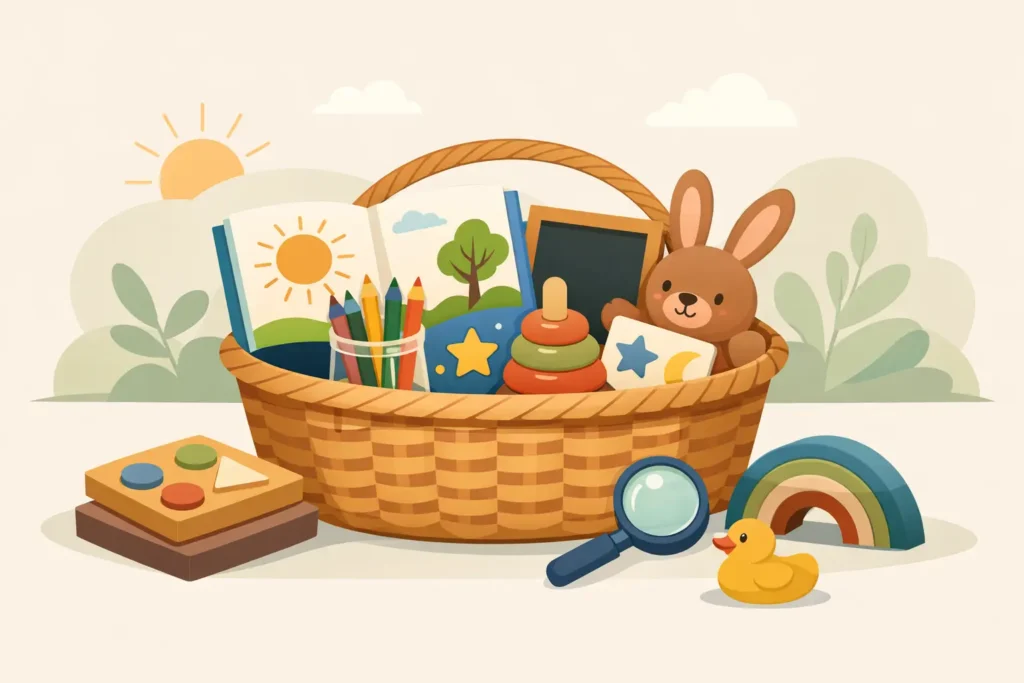
Some mornings start with energy to spare. Others begin with a child still in pajamas, a half-eaten banana on the table, and a parent trying to make the first hour feel calmer and more productive. That is exactly where preschool morning basket ideas can help. A simple basket filled with a few intentional activities gives young children a gentle way to ease into the day while practicing early learning skills through play.
A morning basket does not need to be elaborate. In most homes and classrooms, the best version is one that is easy to set out, easy to rotate, and flexible enough to match a preschooler’s attention span. Think of it as a soft start, not a packed lesson plan. It can support literacy, fine motor practice, early math, and even social-emotional learning without feeling like formal school right away.
What makes a preschool morning basket work?
The strongest morning baskets are simple, predictable, and inviting. Preschoolers do well when they know what to expect, but they also stay engaged when there is a little novelty. That means a basket should include familiar activity types with materials that change every week or two.
It also helps to keep expectations realistic. A preschool morning basket is not meant to fill two hours. For many children, 15 to 30 minutes is plenty. Some days it may stretch longer if an activity clicks. Other days your child may only do one thing before moving on. That is still useful. The routine itself is part of the value.
If you are teaching multiple ages, a morning basket can still work well, but you may need layered activities. A younger preschooler might sort colors while an older child matches beginning sounds. The shared routine matters more than making everything perfectly equal.
Preschool morning basket ideas for literacy
Early literacy fits naturally into a morning basket because it feels warm, cozy, and low pressure. You are not trying to force reading instruction first thing in the morning. You are simply creating repeated, playful exposure to language and print.
1. A read-aloud book and one follow-up question
Start with a picture book, poem, or short nonfiction selection. Keep it brief enough that your child stays with you. After reading, ask one meaningful question such as, “What happened first?” or “How do you think the character felt?” That small conversation builds listening comprehension and vocabulary.
2. Alphabet cards with a simple focus
Instead of reviewing the entire alphabet every day, choose two or three letters. Children can trace them with a finger, name the sound, and find an object that starts with each one. This works especially well for preschoolers who get overwhelmed by too many choices at once.
3. Name practice
A child’s own name is one of the best entry points for literacy. Add a name card, magnetic letters, or a laminated sheet for tracing. Some children will be ready to copy their name with a crayon, while others may only want to build it with letter tiles. Both are useful.
4. Rhyming or picture sound matching
A few cards with rhyming pictures or beginning-sound matches can turn phonological awareness into a quick game. Keep this playful. If a child is guessing wildly, model the answer instead of turning it into a correction-heavy lesson.
Morning basket ideas for preschool math skills
Math in preschool should feel concrete. A morning basket is a great place for hands-on materials that children can touch, move, and compare.
5. Counting objects
Place pom-poms, buttons, counting bears, or small blocks in the basket with numeral cards from 1 to 10. Children can count out the right number for each card. If your child is younger, focus only on counting aloud and touching each object once.
6. Pattern strips
Make simple color or shape patterns and let your child continue them with manipulatives. Patterns build early math thinking, but they also strengthen attention and visual discrimination.
7. Sort and classify trays
Include a muffin tin or small bowls with mixed items to sort by color, size, shape, or category. This is one of those preschool morning basket ideas that looks very simple but supports real thinking skills. It also works especially well on mornings when a child wants to work quietly with their hands.
8. Calendar and weather check-in
If your child likes routine, add a short calendar moment. Talk about the day of the week, the month, and the weather outside. This does not need to become a long circle time. A quick daily check-in is enough to build vocabulary and a sense of time.
Fine motor and handwriting-friendly basket ideas
Many parents want morning time to include pre-writing practice, but preschoolers often respond better when hand strength comes first. A basket can gently support both.
9. Playdough with tools
A small container of playdough, child-safe scissors, cookie cutters, or rolling tools can keep little hands busy while building strength for writing later. If your child resists pencils, this is a smart place to start.
10. Tracing cards and dry-erase markers
Use simple lines, shapes, or beginner tracing cards rather than worksheets packed with directions. Preschoolers usually do better with short, clear tasks. If you already use printable learning materials, this is a natural place to add one or two pages instead of a full packet.
11. Sticker or dot marker pages
These activities strengthen hand control and usually feel fun right away. They are especially helpful for children who need something engaging before they are ready to sit for a more focused task.
Preschool morning basket ideas for calm and connection
Not every basket item has to be academic. Preschoolers learn best when they feel regulated, connected, and ready to participate.
12. Feelings cards or emotion prompts
A simple set of faces showing happy, frustrated, excited, tired, or worried can help children check in with themselves. You might ask, “Which face looks like you this morning?” This can lead to strong conversations without making the routine heavy.
13. A short song, rhyme, or fingerplay
Songs are excellent for transitions. Keep a few lyric cards in the basket or repeat the same song for a week. Repetition helps preschoolers join in confidently.
14. A simple invitation to talk
Include one photo, object, or prompt card that sparks conversation. It could be a leaf from outside, a family picture, or a question like, “What would you build if you had a giant box?” Language growth often happens in these small, relaxed moments.
15. One independent quiet activity
Puzzles with a few pieces, lacing cards, or matching games give children a way to settle in on their own. This is especially helpful if you need to start breakfast, help a sibling, or transition into the rest of your homeschool morning.
How to build a basket without overcomplicating it
A common mistake is trying to include everything at once. The better approach is to choose three to five items total. One literacy activity, one math activity, one fine motor task, and one calming or conversational piece is often enough.
Rotation matters too. If materials stay the same for too long, children stop noticing them. If you change everything daily, prep becomes exhausting. A weekly rhythm usually works best. Keep a few core items consistent, then swap in one or two new choices.
Storage does not have to be fancy. A tote, tray, bin, or actual basket all work. What matters is that the materials are visible and easy to access. Preschoolers are much more likely to engage when they can see what is available.
When morning baskets do not go as planned
Some days your child will ignore the basket. Some days they will dump everything out and lose interest in five minutes. That does not mean the routine failed. Preschool learning is rarely linear, and attention can vary based on sleep, hunger, mood, and developmental stage.
If your morning basket consistently feels stressful, scale back. Fewer items often lead to better engagement. You can also move the routine later in the day if mornings are your family’s hardest time. Despite the name, a morning basket is really just a structured invitation to learn. It does not have to happen at 8:00 a.m. to be effective.
For families who want a little more structure, pairing your basket with simple printable resources can help. Brands like Kids Learning Journey often make it easier to add beginner-friendly tracing, phonics, or early math practice without creating everything from scratch.
A simple rhythm to try
If you are starting from zero, try this sequence: begin with one book, follow with one hands-on skill activity, then offer one independent choice. That is enough to create a gentle learning habit without making your child feel pushed.
The best preschool morning basket ideas are the ones you will actually use. Keep it warm, keep it manageable, and let it support your child’s growth one ordinary morning at a time.