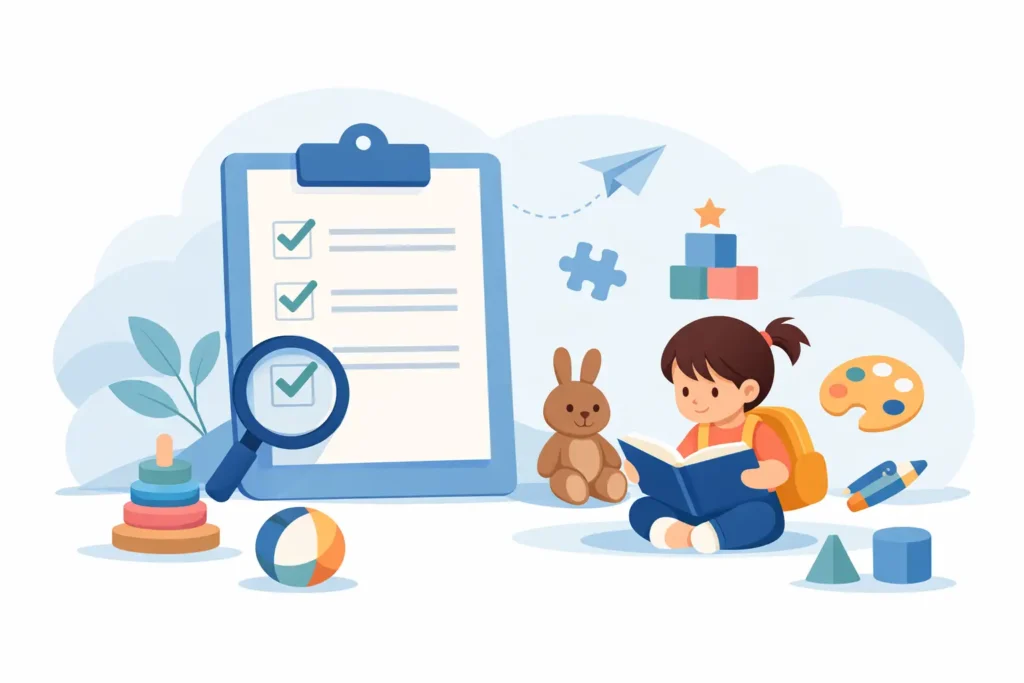
The weeks before kindergarten can make even confident parents second-guess themselves. If you’re wondering whether your child is “ready,” a kindergarten readiness skills checklist can help you look at the big picture without turning normal childhood differences into a problem.
The most helpful way to use a checklist is as a guide, not a pass-fail test. Kindergarten teachers do not expect every child to arrive with the exact same strengths. Some children know many letters but need help taking turns. Others are socially comfortable but still working on pencil control. Readiness is really a combination of early academic skills, independence, communication, and emotional growth.
What a kindergarten readiness skills checklist should measure
A strong kindergarten readiness skills checklist looks beyond counting and the alphabet. It should include how a child handles routines, follows directions, manages basic self-care, and interacts with other children and adults.
That broader view matters because kindergarten asks children to do many things at once. They may need to listen to a group instruction, wait for materials, sit for a short lesson, share space with classmates, and then complete a simple task independently. A child who can do some of those things, even imperfectly, is building the foundation for a smoother transition.
It also helps to remember that school expectations vary. A full-day kindergarten program may demand more stamina and independence than a shorter program. Some classrooms are highly play-based, while others introduce more structured literacy and math routines early in the year. That means readiness is not one fixed standard. It depends partly on the child and partly on the school setting.
Language and early literacy skills
Children do not need to be fluent readers before kindergarten. In fact, many are not. What helps most is a growing comfort with spoken language, books, sounds, and print.
A child is generally on track if they can speak in complete thoughts most of the time, answer simple questions, and express basic needs clearly. They should be able to listen to a story for a few minutes, talk about what happened, and recognize that books have a front, back, and pages that turn in order.
Letter knowledge is helpful, especially recognizing some uppercase letters and possibly a few lowercase letters. Many children also begin to notice rhymes, identify the first sound in familiar words, or recognize their own name in print. These are strong early literacy signs, but they do not all have to be mastered at once.
If your child enjoys being read to, can retell part of a familiar story, and is beginning to connect sounds and letters, that is meaningful progress. Daily read-aloud time, alphabet games, and name-writing practice often do more for readiness than drilling flashcards.
Early math and thinking skills
Kindergarten math starts with simple ideas, but those ideas still matter. Children benefit from recognizing small quantities, counting with growing accuracy, noticing patterns, and understanding words like more, less, big, small, first, and last.
Many ready-to-begin kindergarten students can count to 10 and often beyond, though they may skip a number here and there. They may recognize a few numerals, sort objects by color or size, and match one object to one number while counting. They also begin solving everyday problems, such as figuring out who has more crackers or which tower is taller.
This is one area where playful practice works especially well. Counting toys during cleanup, sorting socks by color, comparing snack portions, or building patterns with blocks all support math readiness. A worksheet can help reinforce a concept, but hands-on learning often makes it stick more naturally.
Fine motor and handwriting readiness
Fine motor skills often get less attention than letters and numbers, but they affect a child’s comfort in the classroom every day. Kindergarten includes drawing, coloring, cutting, gluing, turning pages, and beginning handwriting tasks.
Your child does not need perfect pencil grip or neat handwriting before school starts. What matters more is whether they can use their hands with some control. They should be able to hold crayons or markers, draw simple shapes, use child-safe scissors with supervision, and attempt to write their first name, even if some letters are reversed or uneven.
Hand strength builds slowly. Play dough, tweezers, stickers, lacing cards, and tracing activities can all help. If your child avoids these tasks completely or tires very quickly, more practice at home may be useful before expecting longer paper-and-pencil work.
Social and emotional readiness for kindergarten
For many children, this is the biggest part of kindergarten readiness. A child who knows the alphabet but struggles with separation, frustration, or group routines may still need extra support during the transition.
Kindergarten-ready children are usually beginning to separate from a parent or caregiver with manageable support. They can take turns some of the time, play beside or with other children, and recover from small disappointments without a major meltdown every time. They may not do these things perfectly, and that is completely normal.
Teachers also look for basic emotional communication. Can a child say, “I’m sad,” “I need help,” or “He took my toy” instead of only reacting physically or shutting down? Can they follow simple classroom expectations like lining up, cleaning up, and waiting briefly? These are learned skills, not personality traits, and they improve with practice.
Pretend play, board games, and simple routines at home can support this area more than many parents realize. So can talking through feelings during everyday moments. When children have words for their experiences, they are often better able to handle school challenges.
Independence and self-help skills
Teachers care deeply about independence because one adult is supporting many children at once. A child does not need to manage everything alone, but they should be moving toward basic self-help skills.
That often includes using the bathroom with minimal help, washing hands, opening simple containers, putting on a jacket, and managing a backpack or lunch items with some support. Being able to follow two-step directions, such as “hang up your backpack and sit on the rug,” also makes a real difference.
This is a good place for parents to focus if academics already seem strong. Sometimes the child who can identify every letter still needs help opening a snack bag or remembering where to put their shoes. Those practical skills can reduce stress quickly once school begins.
Signs your child may need more support
A checklist is most helpful when it shows where practice could make life easier. It is not there to create panic.
You may want to build in extra support if your child has a very hard time separating from caregivers, cannot follow simple directions, rarely communicates needs clearly, or becomes overwhelmed by basic routines. The same is true if they show little interest in books, struggle significantly with peer interaction, or have difficulty with everyday motor tasks like holding crayons or using utensils.
None of these automatically mean a child is not ready for kindergarten. They simply suggest that a slower transition, more targeted practice, or a conversation with a preschool teacher or pediatrician might help. Sometimes the issue is developmental timing. Sometimes it is anxiety. Sometimes it reflects limited exposure rather than a true delay.
How to build kindergarten readiness at home
The best preparation usually looks simple. Read aloud every day. Practice short routines. Let your child help with cleanup, dressing, and snack prep. Talk through feelings and problem-solving during play. Count objects in real life, notice letters on signs, and make time for coloring, cutting, and hands-on play.
Short, consistent practice tends to work better than long lessons. Ten focused minutes on name writing or rhyming can be more effective than pushing a tired child through a full workbook page. If your child enjoys printable activities, beginner-friendly resources from Kids Learning Journey can be a helpful way to reinforce skills without making learning feel heavy.
Most of all, try to notice growth, not just gaps. A child who can now sit for a story, ask for help politely, or write the first letter of their name is moving in the right direction.
A simple way to use this checklist without stress
Look at readiness in categories instead of obsessing over one skill. Ask yourself whether your child is making reasonable progress in language, early literacy, early math, fine motor control, social-emotional development, and independence. If the answer is yes in most areas, they are likely building the foundation they need.
And if one area is weaker, that does not erase the others. Kindergarten teachers expect uneven development. Young children grow in bursts, and confidence often changes everything once they are in a supportive classroom.
Your child does not need to start kindergarten already polished. They just need enough practice, support, and encouragement to step into the classroom ready to keep learning.