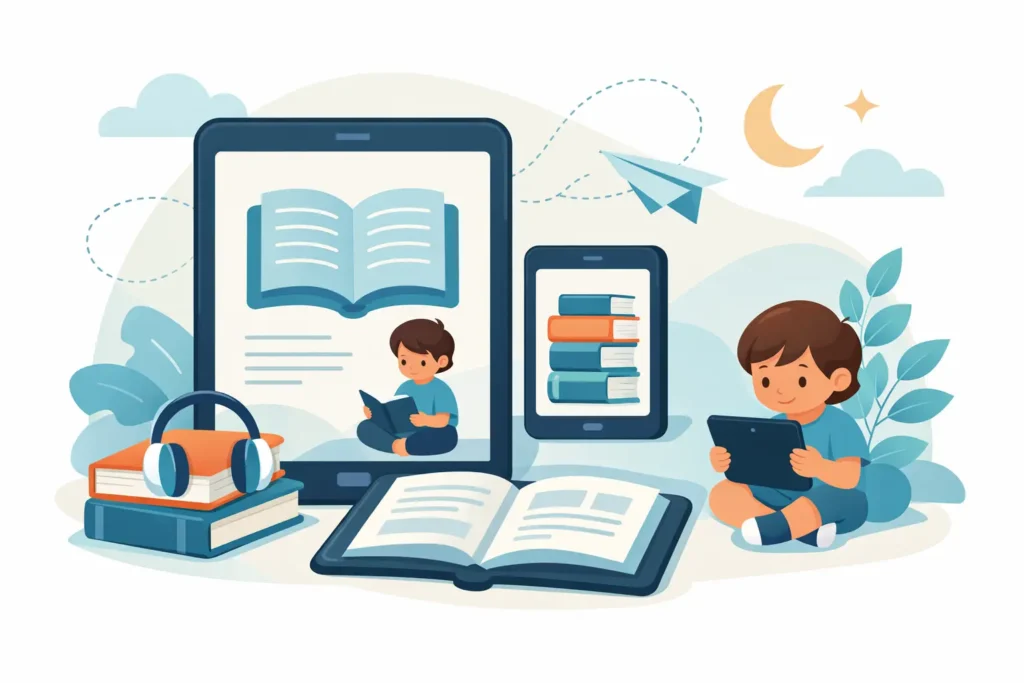
A child who happily taps through an ebook for ten minutes and then asks to read it again is giving you useful information. They are telling you the format works for them. For many families and teachers, the best ebooks for beginning readers are not just digital versions of picture books. They are tools that can support phonics practice, build reading confidence, and make short reading sessions feel more manageable.
That said, not every ebook marketed to young readers is actually helpful. Some are too busy, too game-like, or so full of animations that the story gets lost. If you are choosing ebooks for preschoolers, kindergarteners, or early first graders, it helps to know what makes a digital book support reading rather than distract from it.
What makes the best ebooks for beginning readers?
Beginning readers need clear text, simple sentence patterns, and strong picture support. In print books, those features matter a lot. In ebooks, they matter even more because children are also learning how to focus on the screen itself.
A good beginner ebook usually has short pages, large font, and words that match a child’s current reading stage. For some children, that means predictable patterns like I see the dog. I see the cat. For others, it means early decodable text with simple sound-spelling patterns such as sat, pin, and hop. The right choice depends on whether your child is still building oral language and print awareness or already sounding out words.
It also helps when the digital features are simple and purposeful. Read-aloud support can be useful, especially when children are following highlighted words. Tap-to-hear-word features can also help early readers connect spoken and written language. But if every page has sound effects, mini-games, and moving characters, attention can shift away from actual reading.
12 strong ebook types and titles to look for
Rather than chasing the flashiest app, focus on ebook categories and well-known early reader styles that consistently work for young children.
1. Alphabet and letter-sound ebooks
These are best for preschool and pre-K children who are still learning letter recognition and beginning phonics. The strongest ones connect each letter to a picture and sound in a very direct way. They are not yet teaching full reading, but they build essential readiness skills.
Look for ebooks that keep one letter or one sound family in focus instead of racing through the entire alphabet too quickly.
2. Predictable pattern books
Pattern books are excellent for children who are just starting to track print. Repeated sentence structures reduce the decoding load and help children join in quickly. A title style like Brown Bear, Brown Bear, What Do You See? works well because children can anticipate the rhythm and use picture clues.
For ebooks, this format often works better than heavily interactive stories because the repetition keeps the reading goal clear.
3. Decodable phonics readers
If a child knows basic letter sounds and is ready to blend simple words, decodable ebooks are often the best next step. These books are designed around specific phonics patterns, so children practice reading words they can actually sound out.
This is a better fit than many leveled readers for children who need structured phonics support. The trade-off is that some decodable books can sound less natural at first. That is normal. Their main job is to build decoding skill and confidence.
4. Bob Books style early readers
Bob Books are a familiar example of very simple early reading text. Whether you use the print versions or digital adaptations, the appeal is the same: small steps, minimal distractions, and clear phonics practice.
These are especially helpful for children who get overwhelmed by crowded pages or long stories.
5. Step-into-reading style leveled ebooks
Leveled readers can work well when a child already has some phonics knowledge and wants stories that feel a little more like real books. Early levels usually offer short sentences, familiar vocabulary, and engaging topics like animals, families, or favorite characters.
The caution here is that leveled books are not always tightly matched to phonics patterns. Some children thrive with them. Others do better with decodables first and leveled texts later.
6. Elephant and Piggie style early dialogue books
Simple dialogue-heavy books can be wonderful for beginning readers because the short speech bubbles break text into manageable chunks. Mo Willems’ Elephant and Piggie books are a strong example of this style.
In ebook form, these can be especially engaging because children can read one character’s lines and an adult can read the other. That shared reading format keeps things fun without making the child carry the whole book alone.
7. Nonfiction beginner ebooks
Some children are far more motivated by real facts than by stories. If you have a child who loves trucks, sharks, weather, or space, beginner nonfiction ebooks can be a smart choice.
The best ones use clear photos, very short text, and one idea per page. They also help children build background knowledge, which supports reading comprehension later on.
8. Sight word practice ebooks
A good sight word ebook can help children build automatic recognition of high-frequency words like the, and, see, and said. These books work best when they use the target words in simple sentences rather than isolated drills.
They should support, not replace, phonics. Children need both.
9. Read-aloud follow-along ebooks
For children who are not yet reading independently, follow-along ebooks can still be useful. Hearing fluent reading while seeing words highlighted on screen helps build concepts of print and story structure.
This is a strong option for younger siblings, reluctant readers, or children who need confidence before attempting the text on their own.
10. Simple rhyme and song ebooks
Nursery rhymes, sing-along books, and repetitive chant books can support early literacy because rhyme helps children hear language patterns. These are especially helpful for preschoolers and kindergartners who are still developing phonological awareness.
The key is making sure the music or audio does not overpower the words on the page.
11. Interactive phonics ebooks with restraint
Some interactive ebooks are genuinely helpful. If tapping a word says the word aloud or breaks it into sounds, that is a useful support. If touching every object triggers random animations, not so much.
The best interactive ebooks for beginning readers keep the interaction tied to reading skills.
12. Custom or printable-to-digital reading books
Sometimes the best ebook is the one matched exactly to the child. Simple digital readers made from family photos, familiar routines, or targeted phonics words can be very effective. A book about My Dog, My Lunch, or We Go to the Park can feel highly readable because the vocabulary and context are already known.
Resources from educational brands such as Kids Learning Journey can also support this kind of structured early practice when families want beginner-friendly materials they can use right away.
How to choose the right ebook for your child
Start with what your child can do without guessing too much. If they do not yet know most letter sounds, choose alphabet, rhyme, and pattern-based ebooks. If they can sound out simple CVC words, move toward decodable readers. If they are already reading short sentences, leveled stories and simple nonfiction may be a better fit.
Interest matters just as much as level. A technically perfect beginner book will still flop if the topic feels boring. A child who loves bugs may work much harder to read a bug book than a generic early reader.
Length matters too. Many adults assume a longer book offers more value, but beginning readers often benefit from short, successful reading experiences. Finishing a six-page ebook independently can do more for confidence than struggling through twenty pages.
Ebooks versus print for beginning readers
Parents often ask whether ebooks are as good as print books for early literacy. The honest answer is that it depends on how they are used.
Print books are often better for sustained attention, page handling, and cozy read-aloud routines. Ebooks can be helpful when they provide audio support, portability, adjustable text, or extra motivation for a child who resists traditional books. For some children, especially reluctant readers, an ebook feels less intimidating.
You do not have to choose one or the other. A balanced approach usually works best. Use print for daily shared reading and ebooks for targeted practice, travel, quiet time, or a fresh way to revisit familiar skills.
How to use ebooks without turning reading into more screen overload
This is a real concern, and it is a reasonable one. Reading on a screen does not need to look like unlimited device time.
Keep ebook sessions short and intentional. Ten to fifteen minutes is often enough for young children. Sit with them when possible, especially at the beginning, and talk about the story the same way you would with a print book. Ask what they notice, help them point to words, and reread favorites.
It also helps to separate reading apps from entertainment apps. If a child knows the tablet sometimes means books and not just videos or games, the routine becomes clearer.
The goal is not to make ebooks replace everything else. The goal is to use them well.
A strong beginner ebook meets a child where they are, gives just enough support, and makes reading feel possible. When that happens, the device fades into the background and the real work begins – a child starts seeing themselves as a reader.