If writing time often starts with a blank stare and an “I don’t know what to write,” you are not alone. Creative writing prompts for kids can turn that moment around quickly by giving children a clear starting point, a little structure, and enough freedom to let their ideas grow.
For young writers, the hardest part is often getting started. They may have plenty of imagination, but putting ideas into words can feel big and overwhelming. A good prompt lowers the pressure. It gives a child one small door to walk through instead of asking them to build the whole house on their own.
Why creative writing prompts for kids work so well
Writing prompts support more than creativity. They also help children practice sentence structure, vocabulary, sequencing, and storytelling. When used regularly, they build confidence because kids learn that they do not have to wait for the perfect idea before they begin writing.
This matters especially for preschoolers, kindergartners, and early elementary students who are still developing handwriting, spelling, and reading skills. If the task is too open-ended, some children freeze. If it is too rigid, they lose interest. Prompts sit in a helpful middle ground. They offer direction without taking away choice.
That said, the right prompt depends on the child. Some kids love silly fantasy topics. Others do better with familiar, real-life situations like pets, family routines, or favorite places. If a prompt does not connect right away, it does not mean the child dislikes writing. It may simply mean they need a different entry point.
How to use writing prompts without making writing feel stressful
The goal is not to get a perfect paragraph every time. The goal is to help children practice turning thoughts into words. For some kids, that may mean writing one sentence. For others, it may mean telling the story out loud first and then writing part of it down.
You can make the activity more successful by keeping expectations age-appropriate. A preschooler might draw a picture and dictate a sentence. A kindergartner might write a simple response with invented spelling. An older child might expand the same prompt into a full story with a beginning, middle, and end.
It also helps to treat prompts as flexible tools, not strict assignments. If a child wants to change the character, setting, or ending, that is usually a good sign. It means the prompt did its job and sparked original thinking.
30 creative writing prompts for kids
These prompts are designed to be simple, playful, and easy to use at home or in the classroom.
Imagination and fantasy prompts
- You wake up and find a tiny dragon sleeping under your bed. What happens next?
- If you could build a treehouse with any room inside it, what would it have?
- A talking rabbit shows up at your front door and asks for help. What does it need?
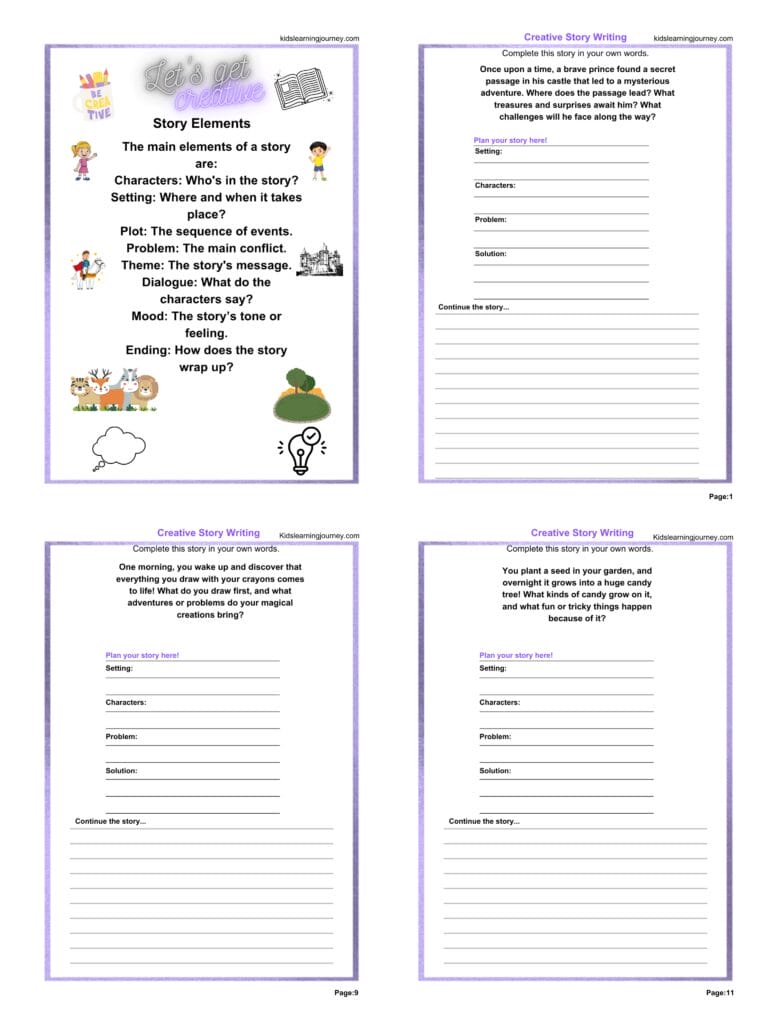
- You find a magic pencil that makes anything you draw come to life. What do you draw first?
- Imagine your backpack could talk. What would it say about your school day?
- You open a door in your house and discover it leads to a secret world. What does it look like?
Everyday life prompts
- Write about your perfect Saturday from morning to bedtime.
- If you could make one new rule for your classroom, what would it be and why?
- Describe your favorite snack as if you were telling someone who has never seen it before.
- Write about a time you helped someone.
- If your pet could spend one day at school, what would happen?
- What is your favorite place in your home, and what makes it special?
Silly and funny prompts
- What would happen if it rained popcorn all day?
- Imagine your shoes started arguing with each other. What are they saying?
- You switch places with your teacher for one day. What do you do?
- Write a story about a sandwich that did not want to be eaten.
- If your stuffed animals came alive at night, what would they do?
- A monkey joins your soccer team. How does the game go?
Adventure prompts
- You are going on a treasure hunt. What clues do you find?
- Write about a trip to the moon. What do you pack?
- You are the captain of a pirate ship. Who is on your crew?
- You discover a map in an old book. Where does it lead?
- A storm blows your kite far away, and you chase after it. Where do you end up?
- You get to explore the ocean in a tiny submarine. What do you see?
Feelings and reflection prompts
- Write about something that makes you feel brave.
- What do you do when you feel nervous?
- Describe a time when someone made you smile.
- If you could give a friend advice about having a hard day, what would you say?
- What is something you are proud of learning?
- Write about a wish you have for this year.
Making prompts work for different ages
One reason parents and teachers sometimes give up on writing activities is that the same prompt can land very differently depending on the child’s stage. A five-year-old and an eight-year-old may both enjoy the idea of a magic pencil, but they will not respond in the same way, and they should not be expected to.
For younger children, keep the process short and supported. Let them talk through their ideas first. Ask a gentle follow-up question like, “What happened after that?” or “Who else was there?” Then help them turn those spoken ideas into simple sentences.
For early elementary students, you can add just a bit more structure. Encourage them to include a character, a setting, and one problem to solve. That light framework helps many children write more without feeling boxed in.
For reluctant writers, reduce the amount they need to produce. A prompt can lead to one sentence, three labeled pictures, or a short oral story. Writing stamina builds over time. Pushing too hard too soon can make the activity feel like a struggle instead of a success.
Easy ways to turn a prompt into a literacy activity
A writing prompt can do more than fill ten quiet minutes. With a few small adjustments, it becomes a stronger literacy exercise.
Ask your child to circle one word they are proud of using. Invite them to add one describing word to make the sentence more vivid. If they finish quickly, have them read their writing aloud and decide where they could add another detail. These tiny steps build revision habits in a way that feels manageable.
You can also connect prompts to reading and phonics practice. If a child is working on short vowel words, encourage them to include some in their story. If they are learning about story sequence, ask them what happened first, next, and last. This is where writing starts to support broader school readiness skills, not just creativity.
At home, a consistent routine helps. A prompt jar, a weekly journal page, or a simple writing notebook can make the activity feel familiar and easy to start. In a classroom, prompts often work best during morning work, literacy centers, or as an early finisher option.
When kids say they hate writing
Sometimes children do not actually hate writing. They hate the frustration that comes with it. Maybe spelling slows them down. Maybe handwriting feels tiring. Maybe they have an idea in their mind but cannot get it onto paper fast enough.
That is why support matters. Let them dictate while you write. Let them draw first. Let them use a word bank. If needed, shorten the task and celebrate one strong sentence. Progress in early writing is rarely about doing more all at once. It is about making the process feel possible.
If you want more ready-to-use literacy tools, Kids Learning Journey offers resources that can help families and educators make writing practice more structured and less stressful.
The best creative writing prompts for kids are the ones that help a child feel capable enough to begin and curious enough to keep going. A simple prompt today can become a favorite story, a new writing habit, or the first sign that your child is starting to see themselves as a writer.