Fewer Toys, More Imagination: A study shows some Amazing Benefits of Toy Rotation for Kids.
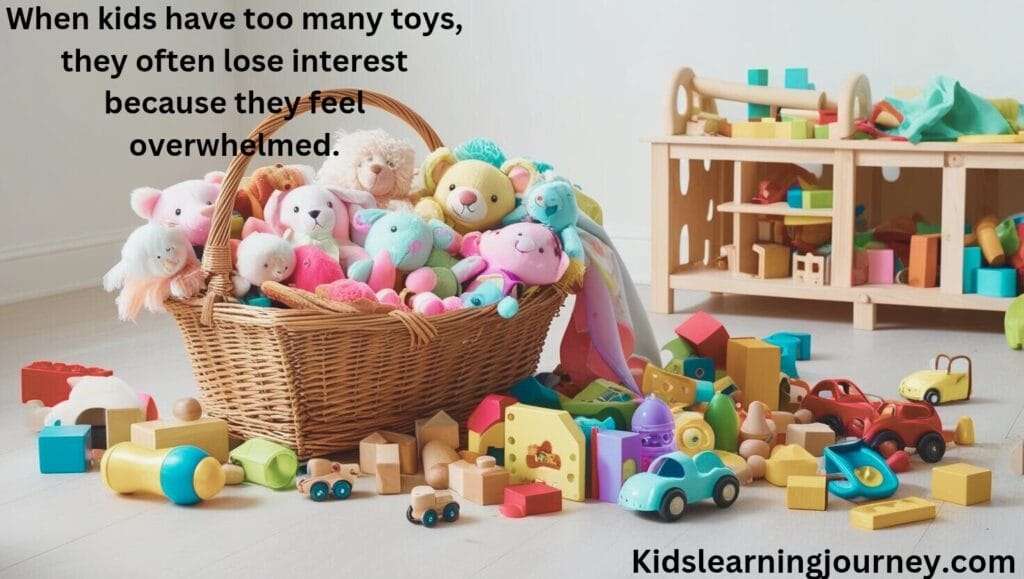
If your child’s playroom seems to have more toys than they could possibly play with, you’re not alone. Having plenty of toys can be wonderful, but too many choices at once can sometimes make it harder for children to decide what to play with.
Toy rotation is a simple way to organize children’s toys by keeping a smaller selection available and storing the rest away temporarily. After some time, you swap some toys for others.
Toy rotation doesn’t mean getting rid of toys or constantly buying new ones. Instead, it gives children opportunities to rediscover toys they already have while making playtime feel fresh and manageable.
In this article, we’ll share practical tips to help you set up an effective toy rotation at home and its benefits.
What Is Toy Rotation?
Toy rotation is a system where you divide your child’s toys into several groups and make only some of them available at a time.
For example, you might keep:
* Blocks and building toys
* A few puzzles* Several picture books* Pretend-play materials
* A simple art activityavailable this week while storing other toys out of sight.
Later, you can replace some of those toys with others.
There is no single correct toy-rotation schedule. Some families rotate toys every few days, while others do it every few weeks. The best system is the one that works for your child and your household.
10 Benefits of Toy Rotation for Kids
1. It Can Reduce Overwhelm
A room filled with toys can give children too many choices at once. A smaller selection can make it easier for a child to look around, choose an activity and begin playing. Instead of seeing dozens of possibilities, they might see a few clear choices: Build → Pretend → Read → Create
This can make the play environment feel more manageable.
2. It Can Encourage Longer, More Focused Play
When fewer toys are available, children may spend more time exploring the toys they have. For example, a small basket of blocks can lead to many different types of play. A child might build a tower, knock it down, create a bridge or use the blocks as part of pretend play. The goal isn’t to keep children occupied every minute. It’s to give them enough opportunity to explore an activity deeply.
3. Familiar Toys Can Feel New Again
One of the simplest advantages of toy rotation is the feeling of rediscovery. A toy that has been sitting on the shelf for weeks may attract little attention. Put it away for a while, then bring it back, and your child may become interested in it again. You don’t necessarily need to buy something new to create a fresh play experience.
4. It Encourages Creative Play
Open-ended toys are especially useful in a toy-rotation system.Blocks, play dough, pretend-play materials, art supplies and loose parts can be used in many different ways
.For example, a set of blocks could become:
* A house
* A castle
* A garage
* A bridge
* A shop
* A pretend classroom
Children can decide what the materials become instead of following one predetermined way to play.
5. It Makes Independent Play Easier to Encourage
A carefully prepared play area can make it easier for children to begin an activity without needing an adult to choose everything for them. Try placing a few accessible activities within reach and keeping the rest stored away. You can also rotate in activities your child already knows how to use independently.
Remember that independent play develops gradually. Toy rotation isn’t a guarantee that a child will suddenly play alone for long periods.
6. It Can Make Cleanup Easier
Fewer toys available usually means fewer toys scattered around the room.Instead of asking a child to clean up an entire playroom, you can give them a simpler task:
“Let’s put the blocks back in the basket.”
Storage baskets, shelves and clearly defined toy areas can make cleanup easier for both children and parents.
7. It Helps You Notice What Your Child Actually Enjoys
Toy rotation gives parents an opportunity to observe children’s interests. Perhaps your child repeatedly chooses:
* Building activities
* Books
* Puzzles
* Pretend play
* Drawing
* Matching games
These observations can help you decide which activities to offer more often.You may also discover that some toys rarely get used.
8. It Can Support Different Types of Learning
A good toy rotation doesn’t need to contain only “educational toys.”
Instead, try creating a balance of activities that encourage different kinds of play.
For example:
Language: Picture books, puppets and storytelling props.
Fine motor skills: Puzzles, threading activities and play dough.
Problem solving: Blocks, construction toys and matching games.
Creativity: Crayons, paper, art materials and pretend-play props.
Movement: Balls, balance activities or simple indoor movement games.
You can also include literacy activities from your child’s current learning stage. For example, children who are beginning to recognize letter sounds might enjoy a simple letter-sound game alongside their other toys.
Explorer more Play-based Learning ideas.
9. Reduces Sibling Conflicts and Encourages Cooperation
Sibling arguments over toys are common, often leading parents to buy duplicates and unintentionally create clutter. Instead, place one toy from each category into a shared basket. This encourages siblings to:
*Take turns
*Play cooperatively
*Create shared imaginative scenarios.
This strengthens their bond and reduces jealousy, competition, and unnecessary toy accumulation.
10. It Can Help Keep the Play Area Manageable
Toy rotation can be particularly helpful for families who want a more organized play space without constantly throwing toys away. You can keep less-used toys in a storage box or cupboard and bring them back into the rotation later. The goal isn’t a perfectly organized Instagram-worthy playroom. The goal is a play environment that is practical for your child and your family.
How to Start a Toy Rotation in 5 Simple Steps
You don’t need an elaborate storage system to begin.
Step 1: Gather the Toys
Collect the toys your child currently has access to.You don’t have to organize every toy perfectly. Start with the toys in the main play area.
Step 2: Remove Broken or Incomplete Toys
Set aside toys that are broken, unsafe, or missing essential pieces. This is also a good opportunity to identify toys that your child has clearly outgrown.
Step 3: Group Toys by Type
Create simple groups such as:
* Building
* Puzzles
* Pretend play
* Books* Art
* Fine-motor activities
* Educational games
You don’t need a separate container for every category.
Step 4: Choose a Small Selection
Put a manageable selection where your child can access it. Try to include different kinds of play rather than putting out several versions of the same type of toy.
For example:1 building activity + 1 puzzle + 1 pretend-play set + books + 1 creative activity.
Adjust the number according to your child’s age, interests and available space.
Step 5: Store the Rest
Place the remaining toys somewhere accessible to you but not necessarily visible to your child. When your child seems ready for something different, rotate a few items.
How Often Should You Rotate Toys?
There is no universal schedule. You could rotate toys:
* Every few days
* Once a week
* Every two weeks
* Once a month
* Whenever your child loses interest
You don’t need to rotate everything at once.In fact, keeping a few favorite toys available all the time can make the system easier for children.
Follow your child’s interests rather than the calendar.
Toy Rotation Ideas by Age
Toddlers
Keep the selection simple.
Consider:
* Large blocks
* Simple puzzles
* Board books
* Pretend-play objects
* Balls
* Stacking toys
* Large-piece construction toys
Always choose toys appropriate for your child’s age and supervise activities when necessary.
Preschoolers
Preschool children may enjoy a wider mixture of activities:
* Puzzles
* Building sets
* Pretend-play props
* Puppets
* Play dough
* Drawing materials
* Picture books
* Matching and sorting games
You can also rotate materials that encourage storytelling and language development. For more ideas, see our guide to [play-based learning activities].
Early Elementary Children
Older children may enjoy more complex choices such as:
* Construction sets
* Board games
* Craft materials
* Writing activities
* Reading materials
* Science or discovery activities
* Problem-solving games
You can connect the rotation to your child’s current interests and school learning without turning every play activity into a lesson.
How Toy Rotation Can Support Reading and Writing?
Toy rotation can also create opportunities for language and literacy practice. Try adding one literacy-focused activity to your rotation.
Reading
Keep a small selection of picture books or early readers available.Rotate books according to your child’s interests, the season or current learning themes.
Storytelling
Add puppets, stuffed animals or simple props that encourage your child to create and retell stories.
Writing
For children who are ready, include:
* Blank paper
* Crayons
* Pencils
* Drawing journals
* Story starters
* Letter-writing materials
Drawing can also be an important bridge toward early writing. If your child is reluctant to write, start with activities that make writing feel playful rather than demanding. You can find more ideas in our guide to [encouraging reluctant writers].
Phonics
For children learning to read, consider rotating in simple phonics activities such as:
* Letter-sound matching
* Picture and sound matching
* CVC word activities
* Letter cards
* Word-building games
Explore our [phonics resources for kids] for more literacy activity ideas.
A Simple Weekly Toy Rotation Example
Here’s an easy starting point
Week 1
* Building blocks
* Two puzzles
* Picture books
* Pretend kitchen
* Drawing materials
Week 2
* Construction set
* Matching game
* Different picture books
* Puppets
* Play dough
Week 3
* Blocks
* New puzzle
* Storytelling props
* Art activity
* Favorite books
You don’t need to replace every item each week. Keep favorite toys available and rotate only some of the others.
Common Toy-Rotation Mistakes to Avoid
Rotating Too Many Toys
The purpose is to simplify the choices, not create several new piles of toys.
Following a Strict Schedule
If your child is happily playing with the current selection, there is no need to rotate everything simply because it is Monday.
Hiding Favorite Toys
Some comfort objects or favorite toys may be better kept available.
Making Every Toy “Educational”
Children need opportunities for imaginative, creative and unstructured play too.
Buying More Toys to Fill the Rotation
Toy rotation works with the toys you already own. You don’t need to purchase new toys every time you rotate.
Final Thoughts
Toy rotation is a simple way to create a more manageable and engaging play environment without constantly buying new toys .By offering a smaller selection, observing your child’s interests and occasionally bringing different toys back into the play area, you can make existing toys feel fresh while creating opportunities for imaginative, independent and skill-building play.
Most importantly, there is no perfect toy-rotation system. Start small, see what works for your family and adjust the system as your child grows. For more ideas that support children’s learning through play, reading and writing, explore the other learning resources at Kids Learning Journey.
FAQs
Q. Is toy rotation good for children?
Toy rotation can help make a child’s play environment more manageable and can encourage children to explore familiar toys in different ways. Its effectiveness depends on the child’s age, interests and the way the play environment is organized.
Q. How many toys should I put out?
There is no magic number. Start with a manageable selection that gives your child different choices without filling the entire play area.
Q. How often should I rotate toys?
There is no required schedule. Some families rotate every week, while others rotate only when their child loses interest.
Q. Should I rotate books too?
You can rotate some books while keeping a few favorites available. Rotating books can give children opportunities to discover different stories and topics.
Q. Does toy rotation mean getting rid of toys?
No, Toy rotation simply means storing some toys temporarily and bringing them back later. It doesn’t require you to throw away toys that are still safe and appropriate.
Q. What are the best toys for rotation?
Open-ended toys such as blocks, pretend-play materials, puzzles, art supplies and books are particularly useful because they can support different types of play.
Q: Is toy rotation suitable for older children?A: Yes, but older children may require more complex or challenging toys for rotation.
Q: Can I rotate educational and household toys together? A: Absolutely — mixing categories stimulates creativity and problem-solving.